
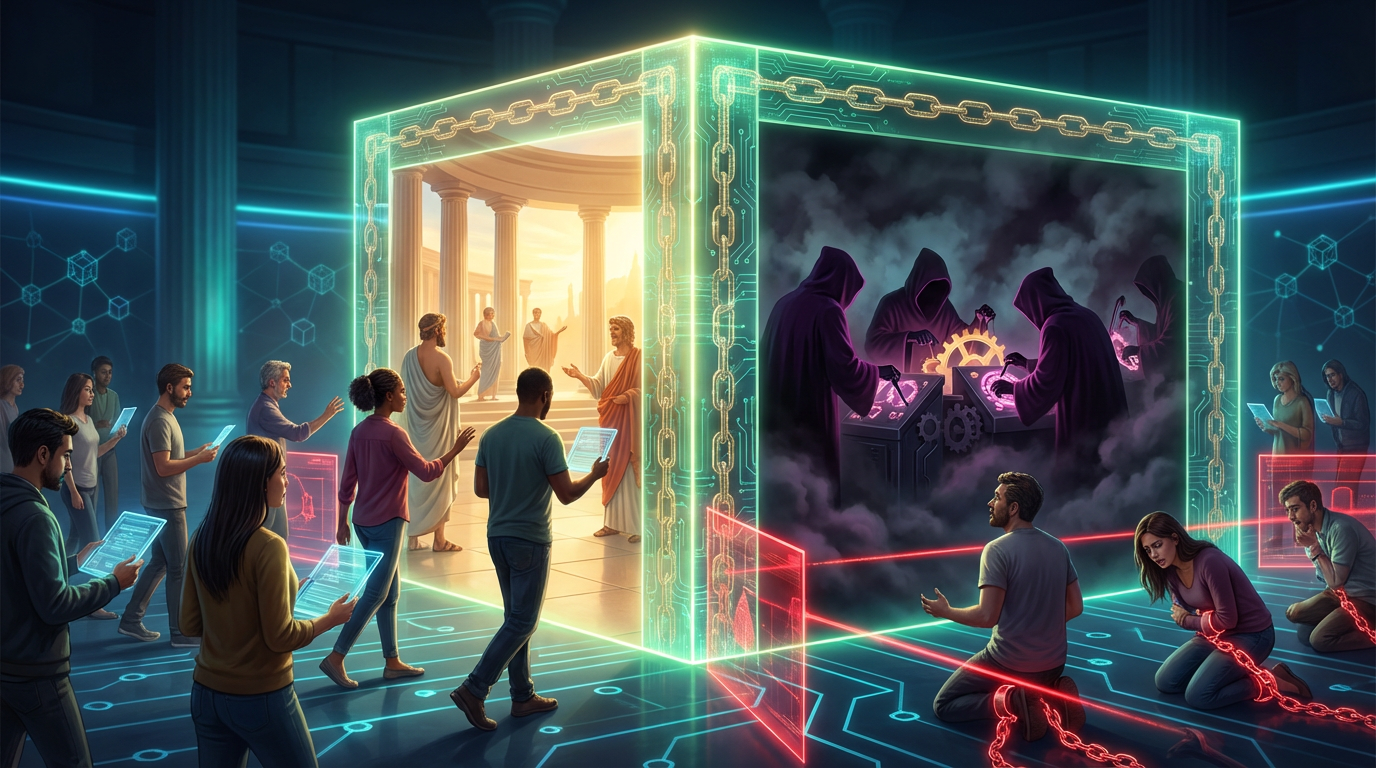

Justin Sun escalates his attack on World Liberty Financial. He labels its April 15 governance proposal one of the most absurd governance scams he has seen and frames it as world tyranny, not world liberty.
- Justin Sun labels the April 15 World Liberty Financial governance proposal "world tyranny" and a "scam" designed to coerce holders.
- The plan impacts 62.3 billion WLFI tokens and includes a mandatory 10% burn of 4.5 billion tokens for participating insiders.
- Sun alleges that an anonymous 3-of-5 multisig froze his 4% voting stake to prevent dissent against the new vesting schedules.
World Liberty Financial posted the governance proposal on April 15. It restructures the unlock schedule for 62.3 billion WLFI tokens held by founders, team members, advisors, partners and early supporters.Early supporters with roughly 17 billion tokens would move to a two-year cliff followed by two-year linear vesting and face no burn. Founders, team and advisors holding about 45 billion tokens would see 10% of their allocation, up to 4.5 billion WLFI, permanently destroyed if they opt in. The rest would follow a two-year cliff and three-year vesting schedule. The project described the changes as a long-term alignment move that answers community pressure and shows conviction in the protocol’s future.
The Proposal Details
Under the plan, early supporters keep their full allocation but accept the new vesting timeline. The founder, team and advisor group face the 10% burn upon acceptance. That would permanently remove up to 4.5 billion WLFI from circulation. WLFI positioned the move as a response to community calls for clearer token economics while committing insiders to longer-term participation through extended locks.
https://x.com/worldlibertyfi/status/2044391016103322028
Sun, who claims roughly 4% voting power, said his tokens were frozen and he could not participate. He added that many other large holders faced the same restriction. The team holds the power to freeze tokens, which he said lets it shape the voting pool before the process begins. Sun posted his detailed critique on X on April 15. He argued the structure sets up a logical trap. Holders who vote yes gain a path to eventual access but accept the burn for insiders. Those who vote no keep their tokens locked indefinitely under the old terms.” This is not voting,” Sun wrote. “This is coercion. What kind of democratic process rewards agreement and imprisons dissent?”
Sun’s Key Allegations
Sun pointed to an anonymous 3-of-5 multisig that controls the actual smart contracts. He also highlighted an anonymous guardian externally owned account with the power to blacklist addresses. Voters, however, must complete full identity verification and compliance checks.
Genuine News Deserves Honest Attention.
High-conviction projects require an intelligent audience. Connect with readers who value sharp reporting.
👉 Submit Your PR“Voters have to show their face while the dictators won’t even reveal theirs,” he argued. The multisig can override any vote outcome, which makes the entire process performative in his view. Billions of dollars hang in the balance. Permanent token burns destroy holder value with no compensation.
Sun called the combination of punished dissent, purged voters, centralized anonymous power and forced identity disclosure on participants a naked violation of property rights dressed as DAO governance.”This is not governance. It is dictatorship in DAO clothing,” he posted. He urged WLFI holders to voice opposition publicly and preserve all legal recourse.
The proposal now heads to a community vote with a seven-day Snapshot period and a 1 billion WLFI quorum requirement. WLFI has defended its governance approach in the past as necessary for regulatory compliance and risk management, even though the anonymous multisig structure remains unchanged.
ChainStreet’s Take
Traders and long-term holders watched this dispute closely because it touched the core of how crypto projects handle power when big political connections enter the picture. Sun, as both a vocal critic and a stakeholder with real skin in the game, turned what looked like a routine tokenomics adjustment into a very public test of governance legitimacy.
The vote will reveal whether enough participants accept the alignment story or share Sun’s concerns about coercion and hidden control. In either case, the episode shows why transparent mechanics and fair voting rules matter more than any marketing narrative in DeFi. When trust in the process slips, it affects everyone holding the tokens.
Activate Intelligence Layer
Institutional-grade structural analysis for this article.