
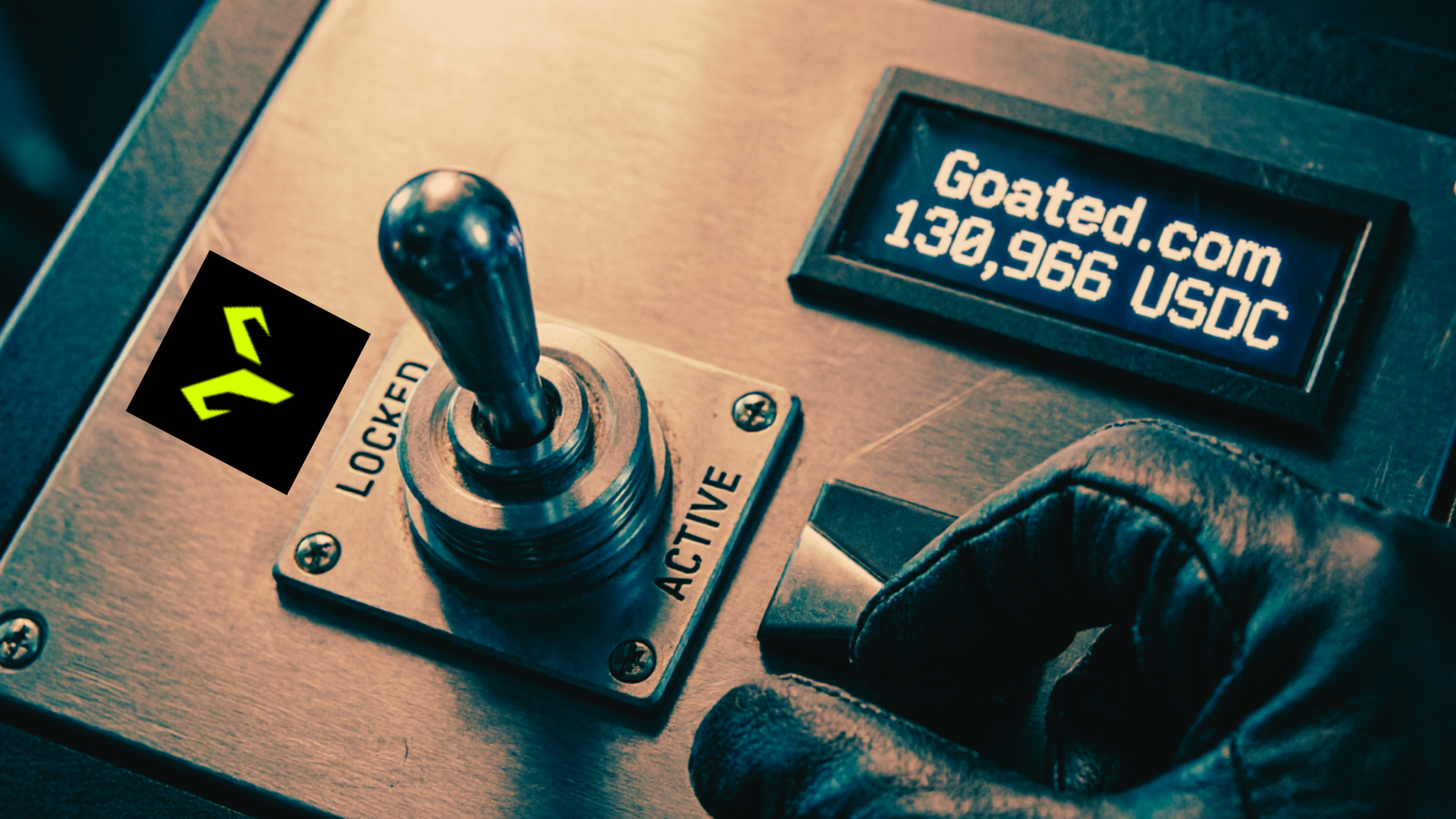

Goated.com’s USDC is back. The wallet recovered its 130,966 USDC today after a 24-hour freeze. Circle offered no apology. No explanation followed. ZachXBT, the on-chain investigator, flagged the unfreeze and noted the total lack of transparency regarding the move.
- Circle reverses a 24-hour freeze on 16 business wallets including Goated.com following a sealed U.S. civil case.
- Compliance teams locked 130,966 USDC belonging to Goated.com without prior notice, halting thousands of daily customer transactions.
- Dependency on Circle for on-chain settlement forces businesses to re-evaluate the risk of centralized stablecoin issuer control.
Compliance broke 16 hot wallets on March 23. A sealed U.S. civil case was the trigger. Businesses like Rain.gg and Finrax were caught in the dragnet. These firms use these addresses to process thousands of daily transactions. ZachXBT looked at the data. He found high-volume business flows, not suspicious mixing. “An analyst with basic tools could have identified within minutes that these were operational business wallets,” he wrote. Circle either skipped that check or ignored the results.
Silence as Risk
Circle restored the Goated.com wallet. Rationales remained private. Nobody knows if the civil case settled or if Circle legal just made a mistake. Total silence creates the real operational risk.
Businesses learned a hard lesson. USDC balances are liabilities when held in Circle-controlled wallets. A single compliance decision based on a sealed filing can kill an entire operation. Users can’t withdraw. Revenue stops. High-volume casinos and exchanges running on thin margins face existential threat from even 24 hours of downtime. Theoretical risk became reality this week.
Circle uses blacklist-enabled smart contracts on Ethereum and Solana. The issuer alone decides who gets locked out. Events this week proved the decision-making process lacks basic rigor.
Genuine News Deserves Honest Attention.
High-conviction projects require an intelligent audience. Connect with readers who value sharp reporting.
👉 Submit Your PRThe Shift Away
Goated.com’s freeze broke gaming flows and payouts. Other affected firms faced the same bottleneck. Smart operators are now looking to trim USDC exposure in hot wallets. They are moving volume to permissionless on-chain settlement.
Centralized control creates avoidable danger. Companies that price in vendor concentration will treat Circle like any critical third-party provider. Contingency plans and balance limits are now mandatory.
Chain Street’s Take
The quiet unfreeze of the Goated.com wallet highlights the problem. It doesn’t fix it. A sealed civil case triggered a blanket freeze of 16 unrelated operational wallets. Basic on-chain diligence should have flagged them as business infrastructure. Instead, Circle acted first and explained never.
Hot wallet dependency on a centralized issuer is a measurable risk. Expect rational actors to respond by trimming balances and moving toward non-freezable alternatives.
Circle’s moat rests on trust. The company demonstrated a lack of transparency this week. In an industry building the future of money, centralized control can turn a settlement asset into a settlement headache instantly.
Activate Intelligence Layer
Institutional-grade structural analysis for this article.