
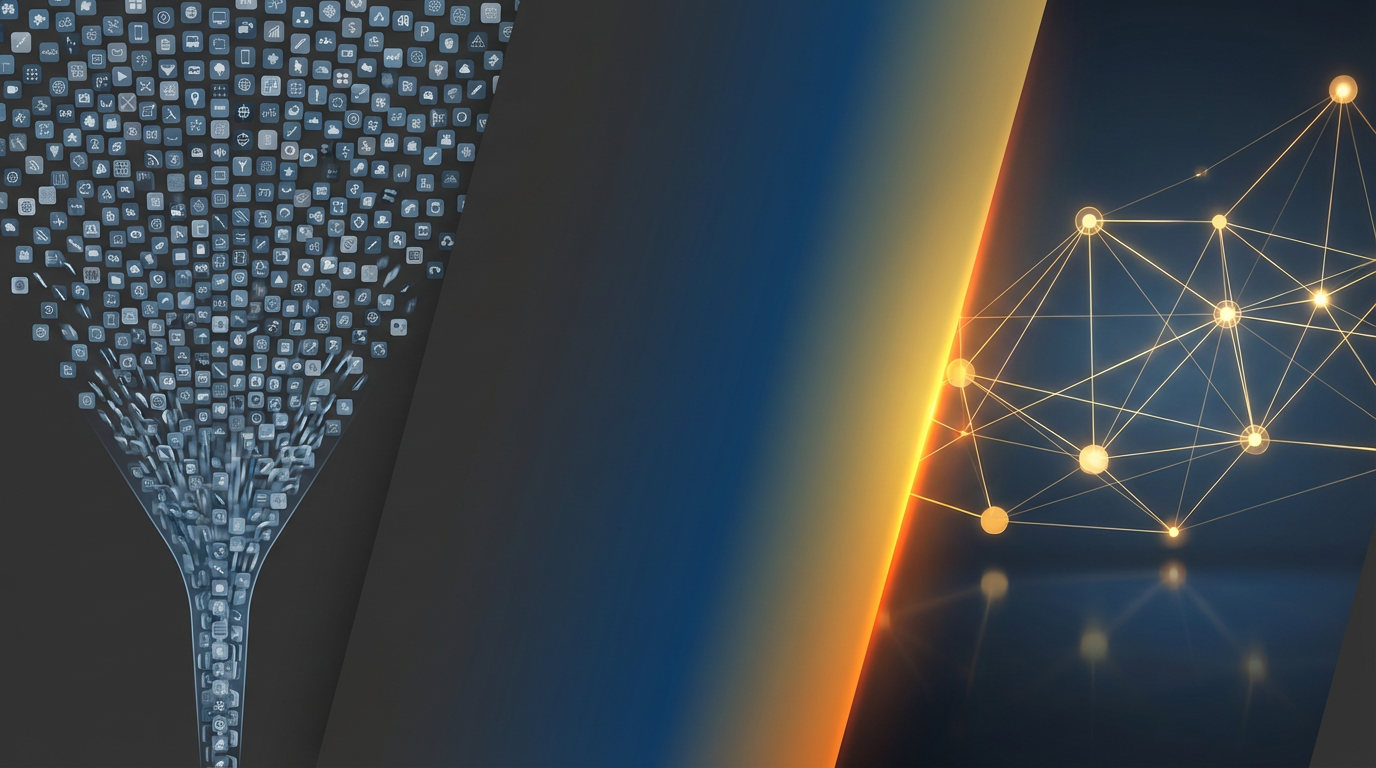

Apple’s App Store is buckling under a wave of AI-generated software. Developers submitted roughly 557,000 new apps in 2025. That’s a 24% jump from the previous year and the highest volume since 2016. Tools like Cursor, Replit, and Lovable are driving the surge by allowing anyone to “vibe code” an application in hours.
- Apple App Store review times reached 45 days as AI-generated software submissions flooded the digital marketplace in 2025.
- Developers submitted 557,000 new applications, representing a 24% year-over-year increase driven by automated coding tools like Cursor and Replit.
- Centralized curation creates a competitive bottleneck, forcing builders toward permissionless blockchain networks like Solana to bypass lengthy manual approvals.
Most of these submissions are shells. They have no users and generate no revenue. This spam pipeline has broken the review process. Wait times for approval now stretch from 14 to 45 days. Apple’s curation team can’t keep pace with the machines.
Data from Appfigures and Sensor Tower shows a massive supply glut. Demand hasn’t followed the curve. The top 1% of apps still capture nearly all the revenue. The rest of the store is becoming an invisible graveyard of low-quality code.
“It’s peak AI spam,” says developer Cynthia Awuzie. She noted that most of the 550,000 submissions have zero traction. “Apple is drowning. If you aren’t solving a real problem, you’re just clogging the drain. The delays are a logical result of a system that wasn’t built for this velocity.”
The Permissionless Route
Centralized gatekeeping is failing. Permissionless blockchain networks are offering a way around the bottleneck. These systems scale with AI creation speed instead of fighting it.
Genuine News Deserves Honest Attention.
High-conviction projects require an intelligent audience. Connect with readers who value sharp reporting.
👉 Submit Your PROn-chain agents and DeFi interfaces don’t wait for a manual review. They reach users through wallet connections or the Solana Mobile Stack. Discovery depends on verifiable metrics like transaction volume and audited activity. Curation happens through code rather than an opaque corporate queue.
AI has pushed the cost of building toward zero. The real struggle is now distribution. Blockchain protocols use on-chain transparency to solve the discovery problem without a middleman taking a 30% cut.
Volume Over Quality
The 2025 spike shows what happens when easy creation hits a locked gate. Shipping time has collapsed from weeks to minutes. The result is a pileup of low-effort apps that never get a single download.
Appfigures reports that most new apps languish with single-digit installs. Many never even reach a reviewer. Apple’s capacity is simply maxed out.
Serious builders are paying the price. A 30-day delay kills momentum. Competitors can iterate a dozen times while a legitimate app sits in limbo. The App Store’s promise of safety is now a competitive drag.
Apple is still collecting checks. Generative AI apps brought in about $900 million for the company in 2025. High-quality titles still make money. But the signal-to-noise ratio is deteriorating and manual review is becoming an impossible expense.
New Distribution Logic
Web3 networks have almost zero distribution costs. A trading agent ships as a smart contract. Users connect a wallet and start. There is no human gatekeeper and no month-long wait.
Capital and usage drive discovery here. A bot that generates yield will surface because the data is public. Token incentives align builders and users without the friction of a centralized store.
Venture capital is shifting. Funds are backing teams that build for open rails from day one. Waiting weeks for an update is a liability in a market that moves at the speed of a prompt.
Chain Street’s Take
The App Store has a supply crisis. Apple’s review process was built for a world where software was hard to make. It wasn’t designed for AI velocity. These 45-day delays were inevitable.
Builders with actual product-market fit are realizing they don’t need a permission slip. They can prove their value on-chain first. The battleground is moving from curation to speed. Discovery is going on-chain.
Activate Intelligence Layer
Institutional-grade structural analysis for this article.