

The company rolls out mandatory KYC exactly as agencies quietly defy Trump’s February ban on its tech.
- Anthropic implements mandatory identity verification requiring government-issued IDs and facial scans to access high-level features in its Claude models.
- Federal agencies continue testing the Mythos model despite a February White House ban and a mandated six-month phase-out period.
- Treasury Secretary Janet Yellen held emergency meetings with JPMorgan Chase and Goldman Sachs CEOs regarding the cybersecurity risks Mythos poses.
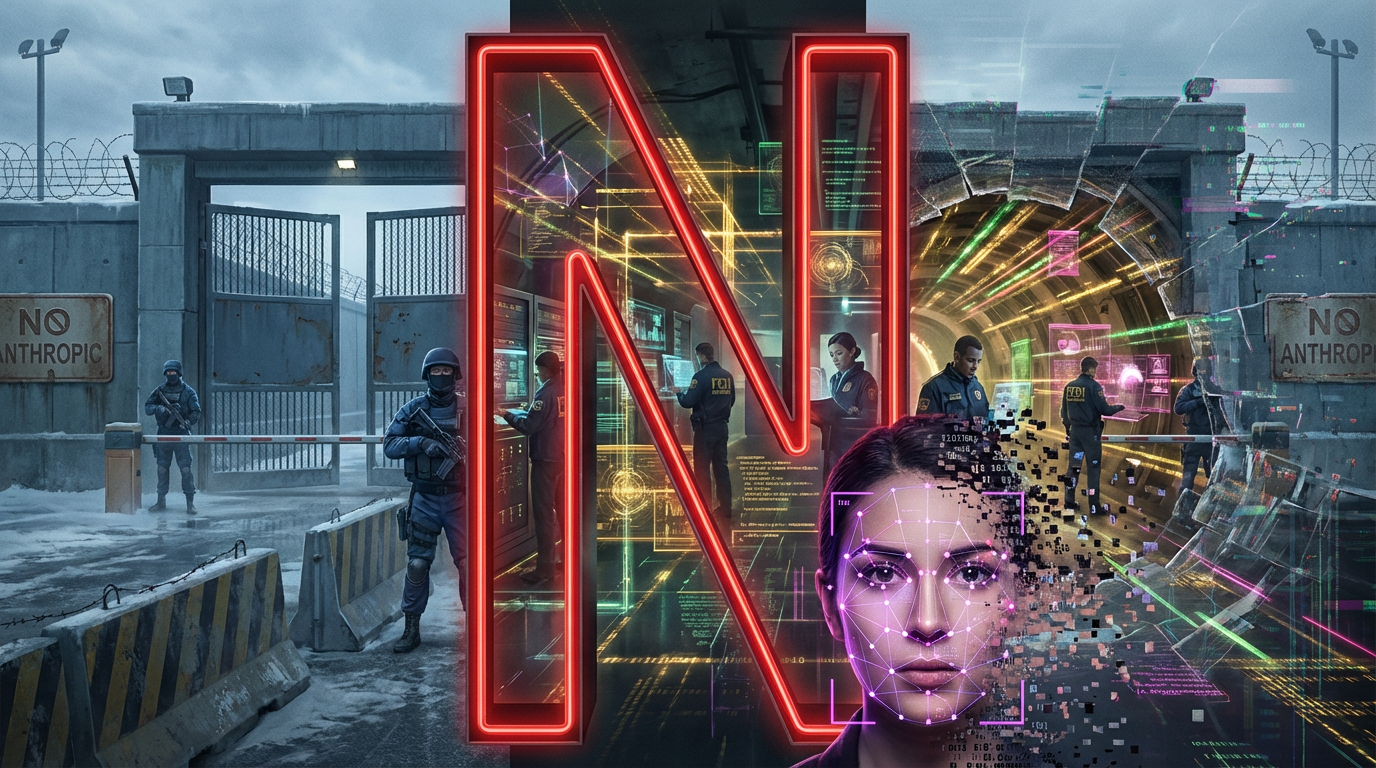
Anthropic is forcing users to hand over government-issued photo IDs and live facial scans to unlock advanced Claude features. At the same time federal agencies never stopped running tests on the company’s powerful Mythos model, even after the White House banned it.
Trump directed every federal agency to ditch Anthropic products back in late February after the Pentagon contract fight. Defense Secretary Pete Hegseth called the startup a supply-chain risk and gave everyone six months to phase out. That order didn’t stick.
The Ban That Didn’t Hold
Commerce Department staff at the Center for AI Standards and Innovation kept running Mythos through real scans anyway. They tested the model for hacking and vulnerability discovery capabilities. Jack Clark, Anthropic’s co-founder, told the administration straight up that national-security needs outweighed the dispute.
The model showed it could spot thousands of previously unknown zero-day vulnerabilities across major operating systems and web browsers. One case involved a flaw in open-source software that had gone undetected for 27 years. When word of Mythos’s power leaked in early April, cybersecurity stocks took a sharp hit. The industry suddenly faced an AI that could find bugs faster than any human team.
Genuine News Deserves Honest Attention.
High-conviction projects require an intelligent audience. Connect with readers who value sharp reporting.
👉 Submit Your PRTreasury Secretary Janet Yellen and Federal Reserve Chair Jerome Powell called an emergency meeting with CEOs from JPMorgan Chase, Goldman Sachs, Citigroup, Bank of America and Morgan Stanley. They talked about the cybersecurity threats Mythos poses to the financial system. Three congressional committees also requested briefings on its cyber scanning abilities.The situation left the administration in a tough spot. The ban was meant to punish Anthropic after CEO Dario Amodei criticized parts of Trump’s AI policy. On paper, agencies had to migrate away from the company’s tech. In practice, the capabilities proved too valuable to ignore. National security and financial stability concerns won out over the political directive.
Anthropic’s Voluntary KYC Rollout
At the same time, Anthropic rolled out mandatory identity checks for Claude users wanting advanced features. Subscribers now scan a physical government-issued ID and perform a live facial recognition selfie through a third-party provider called Persona. Anthropic says the step is simply to prevent abuse and enforce usage policies.
No current law requires AI companies to collect government IDs from users. The company implemented the checks voluntarily. Policy watchers see it as building the infrastructure for whatever rules Washington might impose next. Once the system exists, it becomes much easier for regulators to make it mandatory.
Traders who custody assets through the big banks feel this tension every day. One big breach exposed by tools like Mythos could make the whole system wobble. Meanwhile, users chasing the full power of Claude now trade privacy for performance. The choice is clear: hand over your ID and get stronger AI, or stay anonymous and settle for less capable models.
Chain Street’s Take
This is the real play. Government bans the company on paper, agencies keep the lights on anyway, and Anthropic hands regulators a ready-made ID database while the ink is still wet on the order. Policy says one thing. The tools and the data grab say another. When the capability is this sharp, the rules bend. Question is how much users let them.
Activate Intelligence Layer
Institutional-grade structural analysis for this article.