

ChainStreet
WHERE CODE MEETS CAPITAL
Loading prices…
Powered by CoinGecko
AI

Medvi’s AI Triumph Hits Regulatory Wall

Federal warnings and a partner data breach dog the $1.8B telehealth startup: class-action lawyers allege a massive fraud scheme.

Medvi’s AI Triumph Hits Regulatory Wall

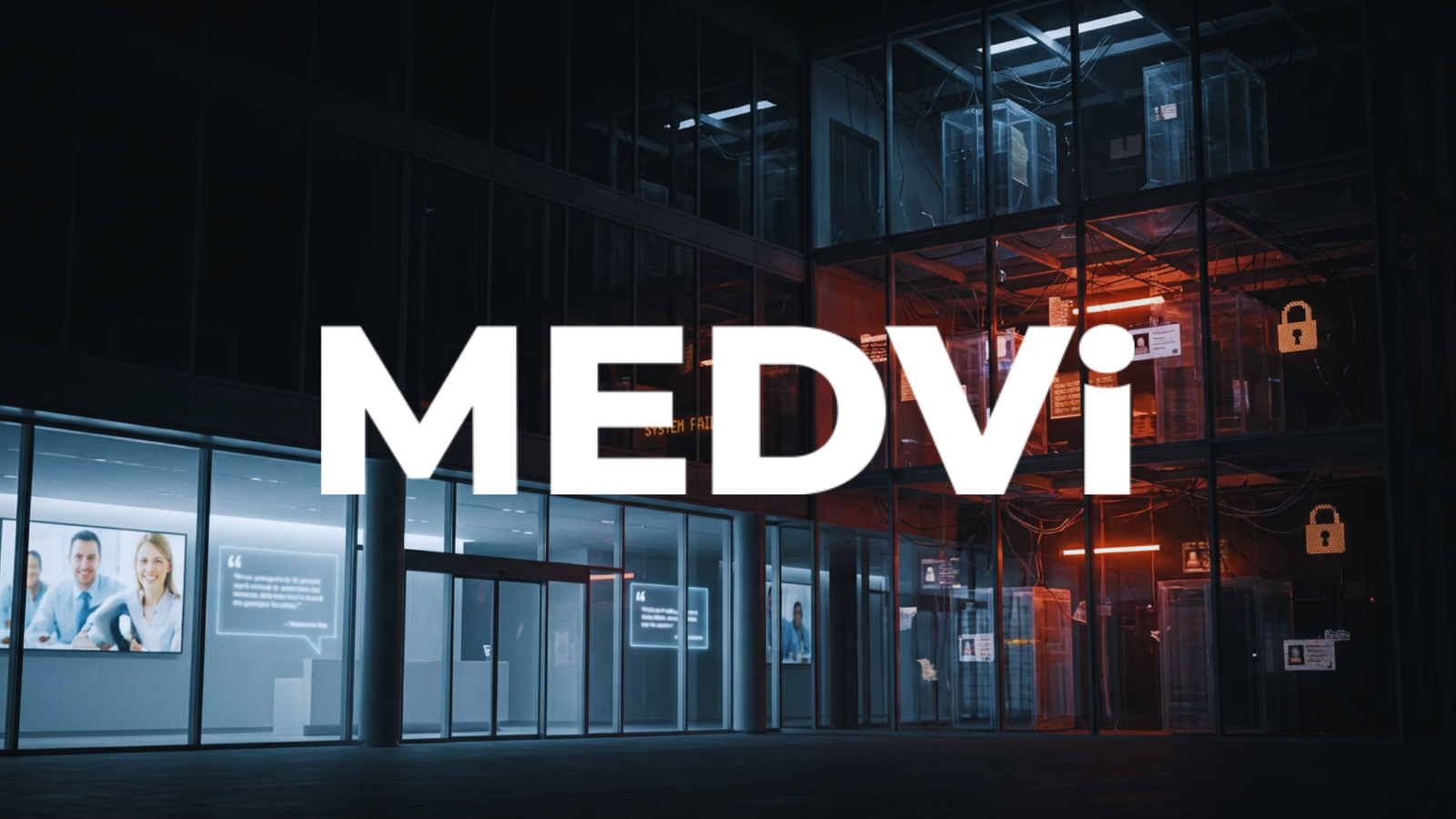
Medvi faces federal probes and a class-action lawsuit after its rise as a two-man AI unicorn. The firm claims it reached a $1.8 billion valuation with a skeleton crew. Court records and FDA letters now challenge that narrative. Compliance gaps look like the real driver of the growth.

Key Takeaways
  • Medvi faces federal investigations and a class-action lawsuit challenging its $1.8 billion valuation and AI-driven growth model.
  • The FDA issued Warning Letter #721455 on Feb. 20 after Medvi reported a 16.2% net profit margin on $401 million revenue.
  • A data breach at partner OpenLoop Health leaked 1.6 million records, exposing Medvi customers to dark web identity theft risks.
Listen to this article

FDA Letter Attacked Medvi’s Drug Branding

The FDA sent Warning Letter #721455 to Medvi on Feb. 20. Regulators accused the company of misbranding compounded GLP-1 drugs. Pictured pill bottles used “MEDVi” labels. Officials said this suggested internal production when Medvi actually used outside labs.

“The compounded semaglutide and tirzepatide products displayed on your website identify ‘MEDVi’ on the pictured label, suggesting MEDVi is the compounder of those drugs when in fact it is not,” the FDA wrote.

The letter also hit claims that the drugs matched approved brands like Ozempic. Medvi ignored its 15-day response deadline. No public records of a filing appeared in the weeks following the warning.

OpenLoop Security Failure Leaked Records

Partner network OpenLoop Health suffered a massive security breach in Jan. 2026. Intruders held access for 48 hours starting Jan. 7. A hacker called “Stuckin2019” claimed 1.6 million patient records reached the dark web. Texas officials confirmed 68,160 affected residents.

Advertisement · Press Release

Genuine News Deserves Honest Attention.

High-conviction projects require an intelligent audience. Connect with readers who value sharp reporting.

👉 Submit Your PR

The leak exposed medical details and birth dates. OpenLoop offered credit monitoring to victims. Medvi customers’ data sat on these servers during the hit. The company relied on OpenLoop for patient management and doctor oversight. Medvi externalized its security risks to a partner that failed.

Lawsuit Alleged Nationwide Fraud Scheme

A class-action suit reached the Delaware federal court in Nov. 2025. The complaint alleged Medvi-affiliated groups ran a nationwide scheme for unapproved tirzepatide. The filing described identical websites using deceptive language.

Plaintiffs argued they bought drugs believing they received personalized supervision. The product was mass-produced medication sold at scale instead. The suit alleged a strategy to spread risk across multiple domains.

Analysts Hit Medvi’s Margin Claims

Medvi reported a 16.2% net profit margin in 2025 on $401 million in revenue. Rival Hims & Hers reached a 5.5% net margin on $2.4 billion. The gap totaled 10.7% points. Analysts questioned the efficiency narrative. They argued Medvi maintained margins by omitting guardrails like physician vetting.

The company attributed the numbers to AI and outsourcing. Medvi kept the ad spend and the customer relationship while moving legal risks to third parties. Analysts argued this model failed to protect the patient.

Chain Street’s Take

Medvi is a risk. Hype sold the narrative. Regulators found the gaps. Security failed the patients. Valuation outran the reality.

The FDA letter and the OpenLoop breach prove the costs were just hidden. Investors should look past the two-man headcount. Medicine requires safety and compliance. Medvi cut the corners to pump the numbers. The narrative is falling. Substance is finally catching up.

CHAIN STREET INTELLIGENCE

Activate Intelligence Layer

Institutional-grade structural analysis for this article.

FAQ

Frequently Asked Questions

01

What is Medvi?

Medvi is a telehealth startup that reached a $1.8 billion valuation by utilizing a small staff and AI-driven automation. The company facilitates access to compounded GLP-1 medications like semaglutide through partnerships with firms like OpenLoop Health. It positions itself as a high-margin alternative to traditional healthcare providers by outsourcing physician oversight and pharmaceutical production.
02

Why does this matter for the telehealth industry?

This case highlights the regulatory risks associated with using AI to scale medical services without traditional safety guardrails. Medvi reported profit margins of 16.2%, nearly triple the 5.5% margin achieved by its established competitor Hims & Hers. The disparity suggests that extreme efficiency in digital health may come at the expense of patient data security and FDA compliance.
03

How will the FDA execute enforcement against Medvi?

The FDA issued a formal warning on Feb. 20 regarding the misbranding of compounded tirzepatide and semaglutide products. Regulators noted that Medvi failed to respond to specific labeling violations within the mandatory 15-day deadline. Failure to comply could lead to an injunction or seizure of products that suggest the company is a primary drug manufacturer.
04

What are the risks of the OpenLoop data breach?

A hacker identified as “Stuckin2019” compromised 1.6 million patient records during a 48-hour security failure in January 2026. Texas state officials confirmed that 68,160 residents were affected by the exposure of sensitive medical details and birth dates. Medvi faces significant liability because it externalized its patient management infrastructure to a third-party partner that lacked sufficient security controls.
05

What happens next for Medvi?

Medvi must defend itself against a class-action fraud lawsuit currently proceeding in the Delaware federal court. Legal experts expect the company to face massive fines if found guilty of operating a deceptive nationwide scheme for unapproved medications. The outcome will determine if the skeleton crew AI business model is viable for highly regulated industries like digital finance and healthcare.

You Might Also Like

CHAINSTREET
🛡
Alex Reeve

Alex Reeve is a contributing writer for ChainStreet.io. Her articles provide timely insights and analysis across these interconnected industries, including regulatory updates, market trends, token economics, institutional developments, platform innovations, stablecoins, meme coins, policy shifts, and the latest advancements in AI, applications, tools, models, and their broader implications for technology and markets.

The views and opinions expressed by Alex in this article are her own and do not necessarily reflect the official position of ChainStreet.io, its management, editors, or affiliates. This content is provided for informational and educational purposes only and does not constitute financial, investment, legal, or tax advice. Readers should conduct their own research and consult qualified professionals before making any decisions related to digital assets, cryptocurrencies, or financial matters. ChainStreet.io and its contributors are not responsible for any losses incurred from reliance on this information.