

ChainStreet
WHERE CODE MEETS CAPITAL
Loading prices…
Powered by CoinGecko
Latest News

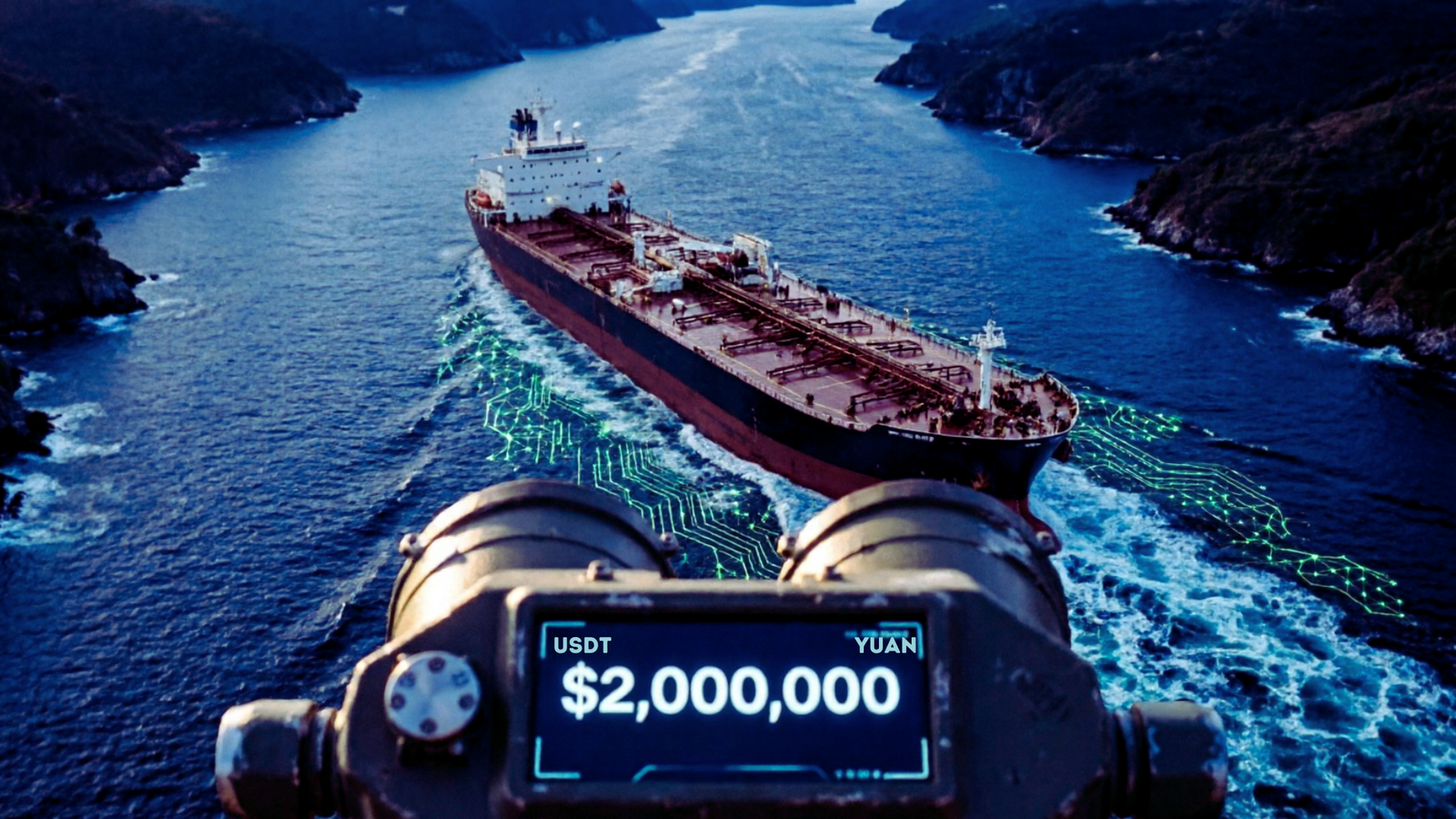
Iran Monetizes Hormuz Chokepoint With $2M Tolls in USDT and Yuan

The IRGC is turning a critical energy corridor into a selective payment gate, accepting Tether on Tron and Chinese yuan while hundreds of vessels wait.

Iran Monetizes Hormuz Chokepoint With $2M Tolls in USDT and Yuan

The Islamic Revolutionary Guard Corps (IRGC) is selectively charging commercial vessels as much as $2 million for safe passage through the Strait of Hormuz. Payments arrive in Tether (USDT) on the Tron blockchain, Chinese yuan, and physical cash. Geopolitical conflict is accelerating the erosion of the dollar-based financial architecture as sanctioned entities shift toward alternative digital rails.

Key Takeaways
  • The IRGC charges commercial vessels $2 million in USDT and Chinese yuan for safe passage through the Strait of Hormuz.
  • Chainalysis records $3 billion in IRGC-linked USDT flows during 2025 as 400 vessels remain stalled outside the critical corridor.
  • This toll system bypasses U.S. sanctions and accelerates global de-dollarization by shifting energy settlement to alternative digital financial rails.
Listen to this article
READY

Ad Hoc Passage and Selective Pricing

About 90 vessels crossed the corridor under ad hoc IRGC arrangements between March 1 and March 15. Lloyd’s List and Financial Times shipping data shows the IRGC prices passage based on a vessel’s origin. Allied fleets from China and India often secure transit through diplomatic channels or yuan-denominated oil swaps. Independent or Western-linked tankers are forced to pay the crypto tolls.

Digital assets create a significant enforcement challenge for U.S. authorities. USDT transfers on the Tron blockchain finalize in roughly three seconds. Analyst Shanaka Anslem Perera noted in a March 24 report that near-instant finality lets payments clear before many compliance teams can even flag the transaction.

Sanctions-evasion strategies have evolved since the 2018 “maximum pressure” campaign. Chainalysis’ 2026 Crypto Crime Report documented over $3 billion in IRGC-linked USDT flows in 2025. While the U.S. Treasury and Tether regularly freeze suspect wallets, investigators estimate they catch only 10% to 20% of identifiable volume. Operators adapt quickly by using layered addresses and offshore OTC desks.

Two-Tier Architecture

Tactical USDT payments pair with larger state-to-state settlements on sovereign digital ledgers. Iran has expanded bilateral deals using China’s e-CNY and Russia’s digital ruble on permissioned networks. These systems operate entirely outside U.S.-regulated infrastructure.

Advertisement · Press Release

Genuine News Deserves Honest Attention.

High-conviction projects require an intelligent audience. Connect with readers who value sharp reporting.

👉 Submit Your PR

“The CBDC channel handles the heavy, sovereign flows,” Perera said. “The USDT channel handles the tactical, fast, deniable ones.”

The bottleneck has left roughly 400 vessels idling outside the strait as insurance costs spike and vetting processes stall.

Chain Street’s Take

The Strait of Hormuz is a live laboratory for de-dollarization. By forcing non-dollar payments for safe passage, Iran is dodging sanctions while exposing the practical limits of Western financial leverage.

The emerging two-tier model is significant. Fast public stablecoins manage tactical tolls. Sovereign CBDCs handle strategic trade. This infrastructure is built to replace Western banks rather than simply bypassing them. Molecules still move through the strait, but an increasing share of the capital travels on rails Washington cannot easily see or stop. What started as an opportunistic workaround now looks like a permanent fork in the global economy.

7views·2AI reads

CHAIN STREET INTELLIGENCE

Activate Intelligence Layer

Institutional-grade structural analysis for this article.

FAQ

Frequently Asked Questions

01

What is the IRGC Hormuz toll system?

The IRGC Hormuz toll system is a selective payment gate charging tankers for passage through a critical energy corridor. Iran accepts $2 million payments in USDT on the Tron network and Chinese yuan to facilitate these transits. This mechanism allows sanctioned entities to generate revenue outside the traditional dollar-based financial system.
02

Why does this matter for the maritime industry?

It creates unpredictable operational costs and elevates insurance premiums for Western-linked tankers idling outside the strait. Lloyd’s List indicates that 400 vessels currently face vetting delays and increased risk of seizure. The practice forces global shipping lines to adopt alternative digital currencies to ensure the safety of their crews and cargo.
03

How does the IRGC execute these digital payments?

The IRGC utilizes the Tron blockchain to finalize USDT transfers in approximately three seconds. Near-instant finality allows payments to clear before U.S. Treasury compliance teams can identify or freeze the targeted wallets. Strategic state-to-state settlements are processed separately through sovereign digital ledgers like China's e-CNY or Russia's digital ruble.
04

What are the risks or critiques of this toll system?

The primary risk involves the permanent fragmentation of the global economy into dollar and non-dollar financial zones. Critics argue that Tether provides an unstoppable rail for sanctioned states to fund military activities without oversight. Furthermore, the 400-vessel bottleneck threatens international energy security and increases the likelihood of localized geopolitical escalation.
05

How do vessels determine their specific toll rates?

The IRGC prices transit based on a vessel’s national origin and corporate affiliation. Allied fleets from China and India often utilize oil-for-yuan swaps or diplomatic channels to secure safe passage. Independent tankers and Western vessels are specifically targeted for the $2 million crypto payments to maximize capital extraction.

You Might Also Like

CHAINSTREET
🛡
Alex Reeve

Alex Reeve is a contributing writer for ChainStreet.io. Her articles provide timely insights and analysis across these interconnected industries, including regulatory updates, market trends, token economics, institutional developments, platform innovations, stablecoins, meme coins, policy shifts, and the latest advancements in AI, applications, tools, models, and their broader implications for technology and markets.

The views and opinions expressed by Alex in this article are her own and do not necessarily reflect the official position of ChainStreet.io, its management, editors, or affiliates. This content is provided for informational and educational purposes only and does not constitute financial, investment, legal, or tax advice. Readers should conduct their own research and consult qualified professionals before making any decisions related to digital assets, cryptocurrencies, or financial matters. ChainStreet.io and its contributors are not responsible for any losses incurred from reliance on this information.