

ChainStreet
WHERE CODE MEETS CAPITAL
Loading prices…
Powered by CoinGecko
AI

Meta’s $2.5B Manus AI Deal Triggers Chinese Exit Bans for Founders

NDRC probes whether the Singapore-based startup's sale bypassed export controls as talent and IP remain under Beijing's scrutiny.

Meta’s $2.5B Manus AI Deal Triggers Chinese Exit Bans for Founders

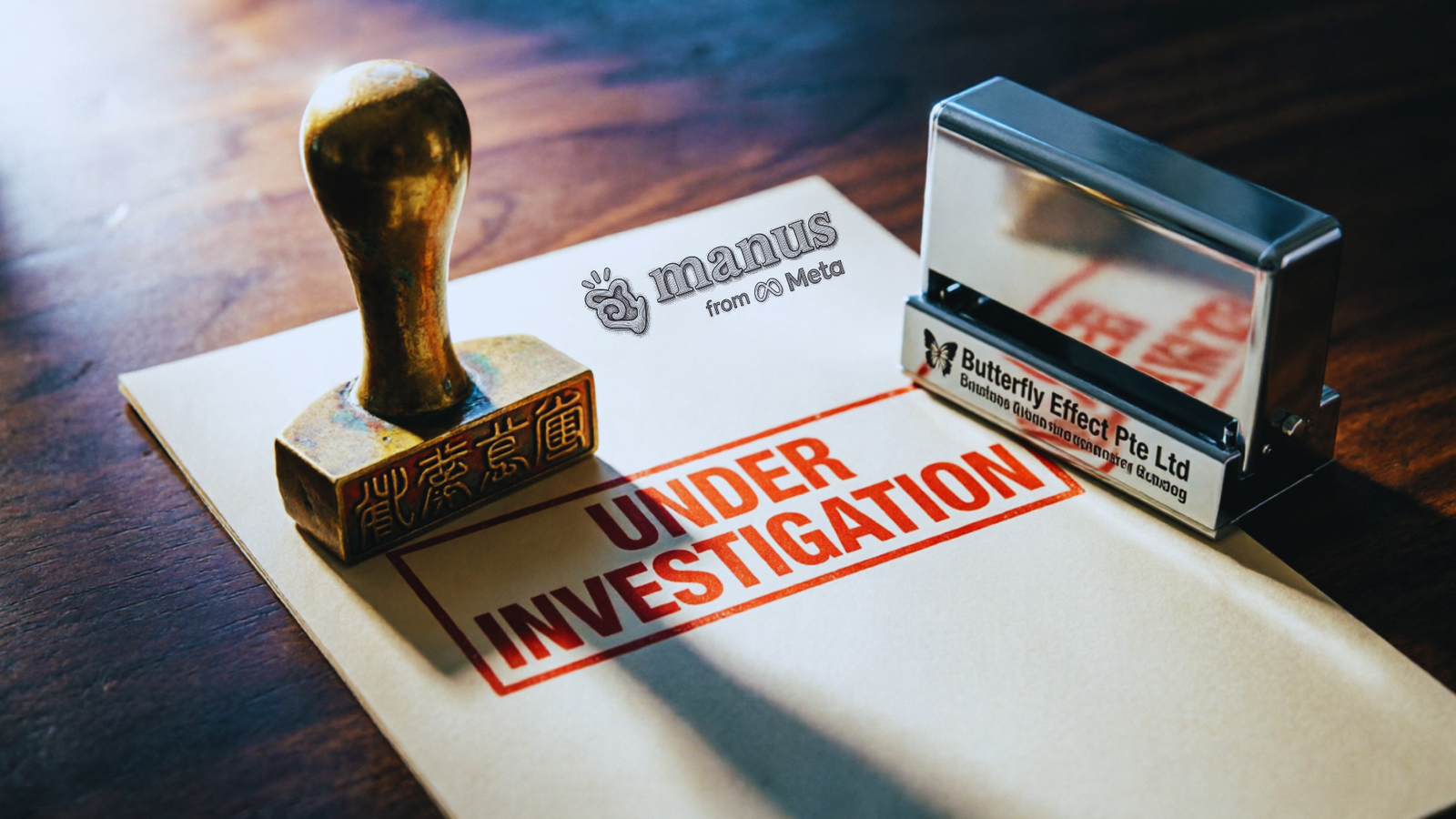
Chinese authorities have barred two co-founders of the AI startup Manus from leaving the country. Regulators are examining whether Meta Platforms’ $2.5 billion acquisition of the Singapore-registered firm broke rules on tech exports, outbound investment, and national security.

Key Takeaways
  • Chinese authorities bar Manus co-founders Xiao Hong and Yichao Ji from leaving the country following a probe by the NDRC.
  • China investigates the $2.5 billion acquisition of Manus by Meta Platforms for potential violations of national technology export control rules.
  • The probe tests if relocating IP to Singapore effectively bypasses Beijing’s oversight of interactive AI systems and outbound investment flows.
Listen to this article

NDRC Summons and Exit Restrictions

Manus CEO Xiao Hong and chief scientist Yichao “Peak” Ji met with officials from China’s National Development and Reform Commission (NDRC) during the week of March 13. Officials informed the executives they’re prohibited from leaving China, though they remain free to travel domestically. People with knowledge of the matter confirmed the restrictions to the Financial Times and New York Times.

Meta’s transaction complied fully with applicable law, spokesman Andy Stone told the New York Times on March 17. Stone stated the Manus team’s deeply integrated into Meta and anticipated an appropriate resolution to the inquiry.

The $2.5 billion acquisition closed on December 30, 2025. China’s Ministry of Commerce (MOFCOM) launched an investigation eight days later, specifically targeting potential violations of technology export controls for interactive AI systems. No formal charges have been filed.

Scrutiny of “Singapore Washing” Tactics

Singapore-incorporated Butterfly Effect Pte Ltd developed Manus, but the startup’s early work occurred through Beijing-based entities founded in 2022. The University of Technology Sydney noted in January 2026 that the company retained a Beijing-based parent until mid-2025. Material connections to Chinese jurisdiction remained during key development phases.

Advertisement · Press Release

Genuine News Deserves Honest Attention.

High-conviction projects require an intelligent audience. Connect with readers who value sharp reporting.

👉 Submit Your PR

Beijing’s regulators are examining whether the relocation of talent and IP to Singapore effectively circumvented approval requirements. Temple University professor Roselyn Hsueh described the strategy as “Singapore washing.” This involves Chinese companies attempting to scrub their identity by moving to a third country, a tactic previously linked to Shein and TikTok.

Heightened scrutiny may serve as leverage ahead of U.S.-China trade negotiations. Shengyu Wang of the Asia Society Policy Institute told the NYT the move also deters other Chinese AI researchers from considering similar cross-border paths.

Chain Street’s Take

Manus represents a structural stress test for the offshore AI exit model. Beijing’s challenge targets economic substance rather than legal form. Regulators are questioning whether the talent and core IP ever truly left Chinese jurisdiction.

The exit bans on Xiao Hong and Yichao Ji apply maximum pressure on Meta to engage directly with Chinese authorities. It’s a precise instrument that sends a clear signal to the broader ecosystem. The resolution of this case: whether through a quiet settlement or forced technology reversal: will set the template for all future cross-border AI acquisitions.

“Singapore washing” offers less shelter than many assumed. Beijing is now policing substance over structure.

9views·2AI reads

CHAIN STREET INTELLIGENCE

Activate Intelligence Layer

Institutional-grade structural analysis for this article.

FAQ

Frequently Asked Questions

01

What is the Manus investigation?

It's a regulatory probe by China’s NDRC and MOFCOM into the $2.5 billion acquisition of an AI startup by Meta Platforms. Authorities examine whether the sale of the Singapore-registered firm bypassed domestic export controls. The investigation focuses on 'Singapore washing' tactics used to obscure Chinese origins during intellectual property transfers.
02

Why does this matter for the AI industry?

This investigation creates a structural roadblock for Chinese AI researchers seeking to exit via offshore acquisitions by Western technology giants. Beijing’s use of exit bans on executives like Xiao Hong signals that domestic talent and IP remain under national jurisdiction. It forces global firms to re-evaluate the legal substance of cross-border deals involving talent from China.
03

How will China execute this probe?

The Ministry of Commerce launched its formal inquiry eight days after the Meta acquisition closed on December 30, 2025. NDRC officials summoned the Manus leadership team during the week of March 13 to enforce domestic travel restrictions. Regulators'll audit the timeline of IP transfers between the original Beijing entities and the Singapore parent company.
04

What are the risks of 'Singapore washing'?

Relocating a company to Singapore provides less regulatory shelter than previously assumed if the core developmental work occurred within China. Critics argue that Beijing’s aggressive enforcement serves as political leverage in ongoing U.S.-China trade negotiations. The primary risk involves a forced reversal of technology transfers or permanent legal isolation for the involved co-founders.
05

What happens next for cross-border AI deals?

The resolution of this case'll establish the definitive legal template for all future acquisitions involving Chinese-origin software intellectual property. Global investors'll likely demand deeper due diligence regarding the geographic substance of AI startups before committing capital. Beijing’s scrutiny effectively ends the era of utilizing shell jurisdictions to circumvent national security export mandates.

You Might Also Like

CHAINSTREET
🛡
Alex Reeve

Alex Reeve is a contributing writer for ChainStreet.io. Her articles provide timely insights and analysis across these interconnected industries, including regulatory updates, market trends, token economics, institutional developments, platform innovations, stablecoins, meme coins, policy shifts, and the latest advancements in AI, applications, tools, models, and their broader implications for technology and markets.

The views and opinions expressed by Alex in this article are her own and do not necessarily reflect the official position of ChainStreet.io, its management, editors, or affiliates. This content is provided for informational and educational purposes only and does not constitute financial, investment, legal, or tax advice. Readers should conduct their own research and consult qualified professionals before making any decisions related to digital assets, cryptocurrencies, or financial matters. ChainStreet.io and its contributors are not responsible for any losses incurred from reliance on this information.