
BTC $71,317.00 ▲ 3.72% ETH $2,234.08 ▲ 5.95% BNB $614.85 ▲ 2.71% SOL $84.5200 ▲ 5.9% XRP $1.3700 ▲ 4.08% ADA $0.2611 ▲ 6.53% DOGE $0.0946 ▲ 4.45% DOT $1.3100 ▲ 5.38% BTC $71,317.00 ▲ 3.72% ETH $2,234.08 ▲ 5.95% BNB $614.85 ▲ 2.71% SOL $84.5200 ▲ 5.9% XRP $1.3700 ▲ 4.08% ADA $0.2611 ▲ 6.53% DOGE $0.0946 ▲ 4.45% DOT $1.3100 ▲ 5.38%
Latest News
Walmart-Backed Fintech Turns Shiba Inu Into a Spendable Asset

Walmart-Backed Fintech Turns Shiba Inu Into a Spendable Asset

Walmart-backed fintech app enables 3 million monthly users to convert and spend the meme token at physical and digital storefronts.

Key Takeaways
  • OnePay integrates Shiba Inu into its payment rails to allow users to buy groceries and household goods at physical storefronts.
  • The Walmart-backed fintech app serves 3 million monthly active users and launched the SHIB spending feature on March 20.
  • OnePay manages backend fiat conversions to protect merchants from SHIB volatility while bypassing traditional manual crypto bridging requirements.
Listen to this article
Walmart-Backed Fintech Turns Shiba Inu Into a Spendable Asset

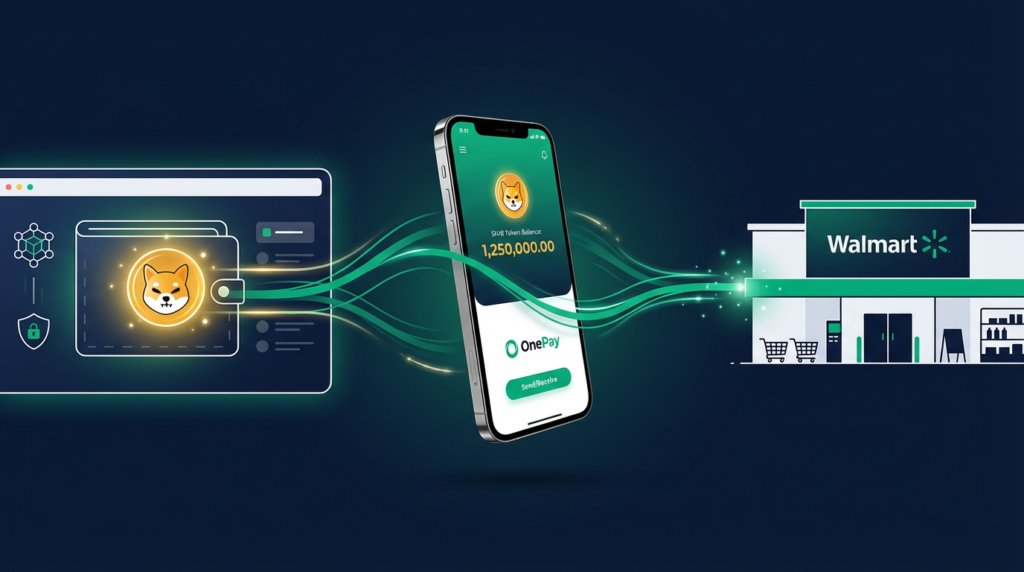
OnePay, the fintech firm controlled by Walmart Inc., breaks new ground by letting shoppers spend Shiba Inu at the register. The update turns the meme coin into a functional tool for buying groceries and household goods within the app’s internal checkout software.

Retail Infrastructure and Settlement Scale

OnePay folded the Shiba Inu token into its core payment infrastructure on March 20. The update allowed more than 3 million monthly active users to utilize the asset for daily retail purchases rather than holding the coin for speculative trading. Unlike standard exchange listings, the software integrated the token directly into the existing settlement systems used for Walmart transactions.

Conversion and settlement processes occurred in the background during the checkout sequence. Users maintained token balances within the app and executed transactions at the point of sale without the requirement for manual bridging. The technical framework tested the feasibility of high-volatility assets within a regulated U.S. fintech environment.

Growth and Vision

General Manager Ron Rojany positioned the expansion as a step toward broader financial utility. “We see crypto as a long-term part of modern financial services,” Rojany said. He noted that the cryptocurrency selection represented a move toward a “comprehensive, accessible digital asset platform” that supported diversified investment strategies. Rojany further observed that the update gave customers greater flexibility in how they managed their digital holdings.

Global Merchant Adoption Trend

Integration into the Walmart-backed ecosystem coincided with a steady increase in real-world utility for the token. Data from the crypto merchant directory Cryptwerk showed that more than 1,140 businesses and services worldwide accepted Shiba Inu as a form of payment as of April 2026. The directory included a mix of e-commerce platforms, digital services, and physical retailers.

Internet-related services and crypto-based companies formed the largest segments of the merchant base. Major entities including Newegg and AMC Theatres maintained support for the token through third-party gateways such as BitPay and CoinGate. While the global total of roughly 1,150 merchants remained small compared to Bitcoin or Ethereum benchmarks, the figure reflected a shift in utility for a meme-origin asset.
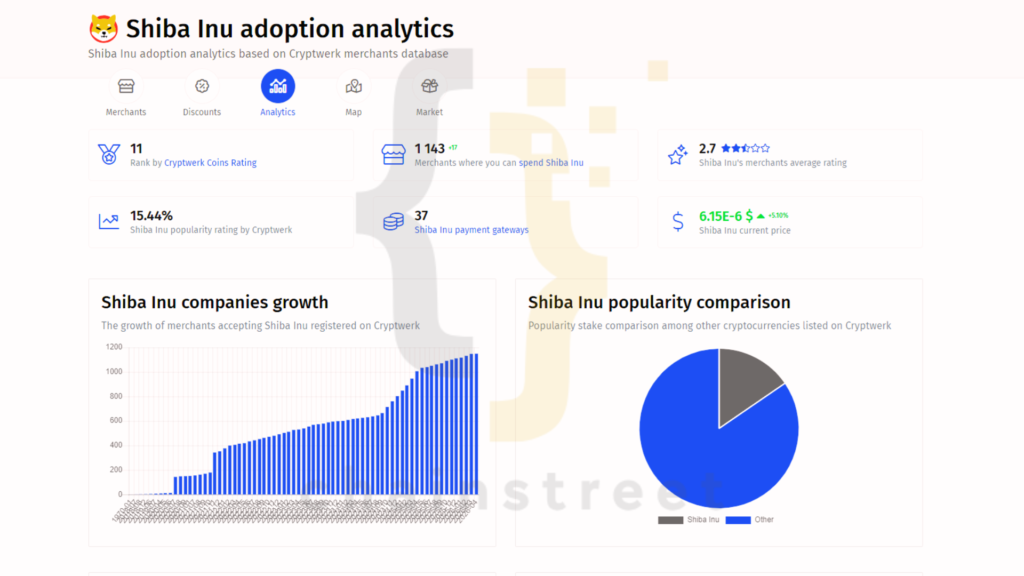
Shiba Inu adoption analytics
credits: Cointwerk

Transactional Mechanics and Volatility

OnePay managed all backend conversions to fiat currency, ensuring that merchants received U.S. dollars while customers liquidated their digital positions. Standard transaction and daily conversion limits applied to all users. Because the system converted the tokens to fiat at the point of sale, price volatility remained a factor between the time a user opened the app and the completion of the purchase. Connected merchants required no additional hardware updates to accept the new payment option.

Chain Street’s Take

OnePay’s move with Shiba Inu is a quiet attempt to turn a meme coin into a functional retail tool. Walmart’s majority stake provides an operational backbone that most crypto projects lack. For long-term holders, the setup offers a clean on-ramp to real-world spending even if the settlement isn’t a “pure” on-chain solution.

On-chain purists will likely dislike the fiat conversion at the point of sale, but that’s the inevitable trade-off for regulatory clearance in a massive retail environment. The data shows a baseline of active merchants globally, but Walmart’s footprint is a different category of stress test. Success now hinges on the consumer. We’re about to find out if SHIB is actually a medium of exchange or just another asset destined to sit idle in a digital drawer.


CHAIN STREET INTELLIGENCE
FAQ

Frequently Asked Questions

01

What is the OnePay Shiba Inu integration?

OnePay embeds Shiba Inu into its internal checkout software to enable direct retail spending for digital asset holders. The update allows users to convert the meme token into groceries or household goods at the register. OnePay transforms a speculative asset into a functional tool within a regulated U.S. fintech environment.
02

Why does this matter for the retail sector?

Walmart-backed OnePay provides a massive retail infrastructure that legitimizes Shiba Inu as a medium of exchange. The platform exposes 3 million monthly users to crypto payments without requiring merchants to install new hardware. OnePay's integration signals a shift toward broader merchant adoption of high-volatility digital assets.
03

How does OnePay execute Shiba Inu payments?

OnePay manages all backend conversions to fiat currency during the checkout sequence at the point of sale. The fintech firm processes these transactions internally to ensure merchants receive U.S. dollars immediately. Users maintain balances within the app and spend them without performing manual on-chain bridging.
04

What are the risks of spending SHIB at Walmart?

Price volatility remains a significant risk because the token value fluctuates between opening the app and completing a purchase. OnePay enforces daily conversion limits to manage the liquidity risks associated with the meme-origin asset. Retailers must rely on the fintech provider's ability to settle transactions in fiat to avoid direct market exposure.
05

Will other major retailers follow OnePay's adoption of crypto?

Merchant adoption continues to rise with over 1,140 businesses worldwide now accepting Shiba Inu via gateways like BitPay. GM Ron Rojany suggests the company views cryptocurrency as a long-term component of a comprehensive digital asset platform. Success in this Walmart-backed ecosystem will likely serve as a blueprint for other retail fintech providers.
🛡
Alex Reeve

Alex Reeve is a contributing writer for ChainStreet.io. Her articles provide timely insights and analysis across these interconnected industries, including regulatory updates, market trends, token economics, institutional developments, platform innovations, stablecoins, meme coins, policy shifts, and the latest advancements in AI, applications, tools, models, and their broader implications for technology and markets.

The views and opinions expressed by Alex in this article are her own and do not necessarily reflect the official position of ChainStreet.io, its management, editors, or affiliates. This content is provided for informational and educational purposes only and does not constitute financial, investment, legal, or tax advice. Readers should conduct their own research and consult qualified professionals before making any decisions related to digital assets, cryptocurrencies, or financial matters. ChainStreet.io and its contributors are not responsible for any losses incurred from reliance on this information.