

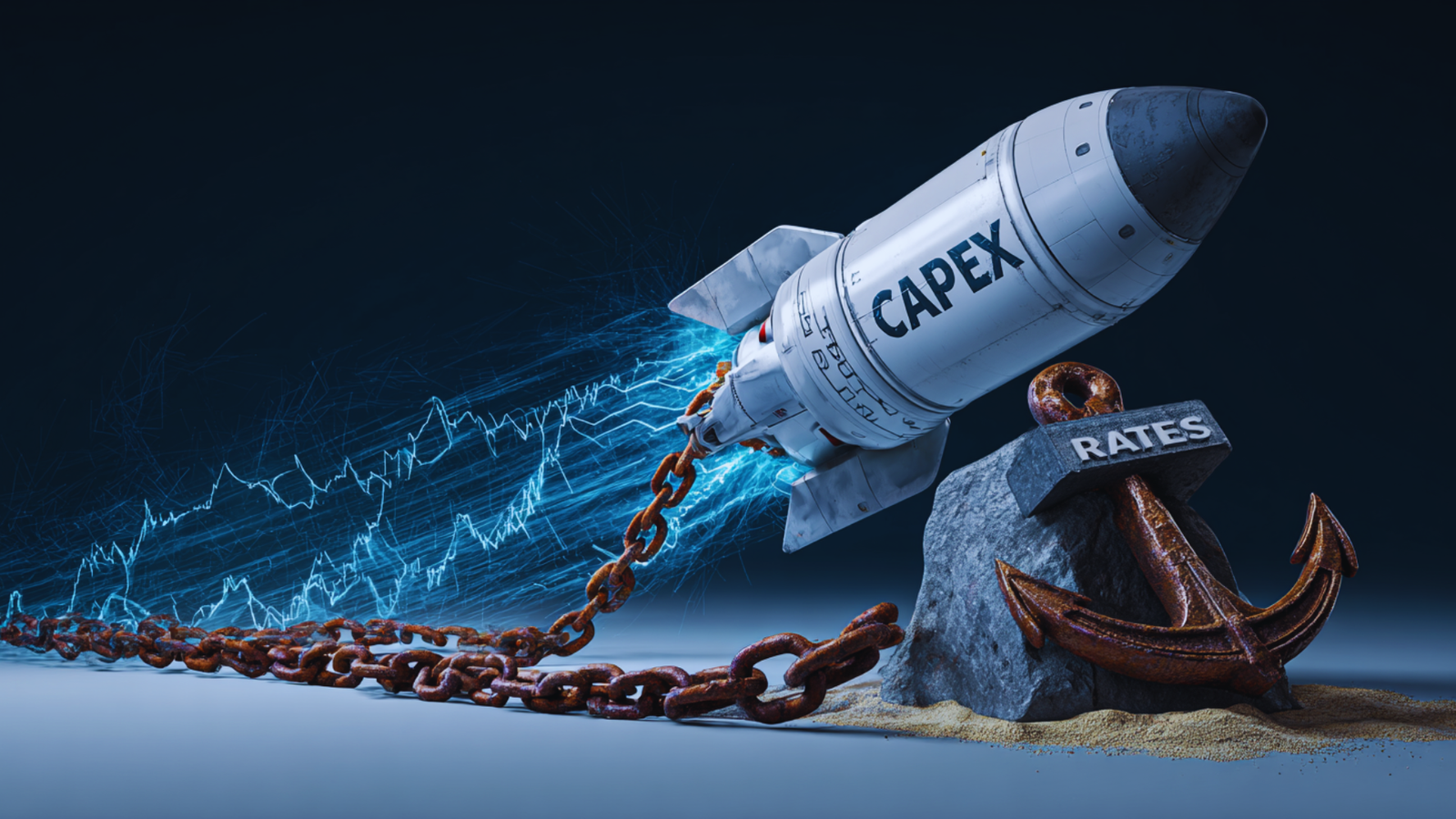

The U.S. economy expanded at an annualized rate of 4.3% in the third quarter, shattering the 3.2% consensus and confirming that the artificial intelligence infrastructure buildout has effectively neutralized the Federal Reserve’s restrictive policy.
- The U.S. economy grew at 4.3% in Q3 2025, shattering forecasts of 3.2% and confirming a structural "AI Decoupling" where tech capex overrides high interest rates.
- Traders have collapsed the probability of a January 2026 rate cut to just 13% after Core PCE inflation remained sticky at 2.9%.
- The expansion is "K-shaped," driven by cash-rich corporate infrastructure spending while credit-dependent sectors like regional banking remain stalled.
Data released Wednesday by the Bureau of Economic Analysis shows a structural divergence: while credit-dependent sectors stall, massive capital expenditure from cash-rich technology firms drove 14% of the quarter’s total growth. This “AI Productivity Decoupling” indicates that high interest rates are failing to brake the digital economy, which relies on corporate treasuries rather than bank loans.
The Rate Cut Trap
The report immediately reset market expectations. With Core PCE inflation sticky at 2.9%, nearly a full percentage point above the Fed’s target, traders have collapsed the probability of a January rate cut to just 13%, down from 20% prior to the release.
“The transmission mechanism is broken,” said a note from desk strategists regarding the data. “The Fed is hitting the brakes, but the AI engine isn’t connected to the wheels.”
K-Shaped Reality
While headline GDP surges, the expansion is uneven. Real consumer spending rose 3.5%, but gains were concentrated in healthcare services (contributing 0.76 percentage points) rather than discretionary goods.
Genuine News Deserves Honest Attention.
High-conviction projects require an intelligent audience. Connect with readers who value sharp reporting.
👉 Submit Your PRThis friction highlights a “K-shaped” expansion where corporations invest in automation over headcount. This dynamic allows output to rise without the wage-push inflation typically associated with a 4.3% GDP print, creating a “goldilocks” scenario for stocks but a confusing signal for policymakers.
The Sustainability Debate
The data has deepened the divide on Wall Street regarding the trajectory of the expansion.
The Bull Case: Supply-side optimists argue the spending represents a non-inflationary productivity boom. “This is an investment in future capacity, not consumption,” noted analysts tracking the sector. They posit that AI spending, projected by some firms to reach 2% of GDP, justifies higher equity valuations even if rates remain elevated.
The Bear Case: Skeptics warn of a “higher-for-longer” trap. “The economy is bifurcated,” warn macro strategists. If the Fed is forced to keep rates restrictive into 2026 to fight service-sector inflation, it risks breaking the debt-laden legacy sectors, commercial real estate and regional banking, that cannot survive the liquidity drought, even as tech giants thrive.
gdp3q25-iniChain Street’s Take
The “Soft Landing” is dead; this is the “AI Decoupling.” The critical figure isn’t the 4.3% headline, it’s the 14% of growth driven by AI capex.
This proves the most dynamic sector of the U.S. economy is immune to the cost of capital. Microsoft and Nvidia build data centers with cash, not loans.
This is a nightmare for the Fed but a clear signal for allocators. Powell must keep rates high to fight sticky 2.9% inflation, yet he cannot halt the infrastructure boom.
The result is a market that crushes debtors while pumping hard assets. The liquidity isn’t coming from a pivot; it’s coming from the retooling of the industrial base. Position for the K-shape: Long the infrastructure, short the debt.
Activate Intelligence Layer
Institutional-grade structural analysis for this article.