

The Lazarus Group, a state-sponsored hacking collective tied to North Korea, launched a new toolkit to compromise high-value targets within the fintech and cryptocurrency sectors. The campaign, dubbed “Mach-O Man,” infected macOS systems by manipulating the procedural habits of executives and software developers.
- The Lazarus Group deploys the "Mach-O Man" malware to compromise high-value cryptocurrency executives through fraudulent Telegram meeting invitations.
- Federal authorities attribute over $2 billion in digital asset thefts to Lazarus Group operations throughout the last decade.
- The ANY.RUN research team confirms that the macOS payload bypasses security software by forcing users to manually execute Terminal commands.
Attack Sequence and Social Engineering
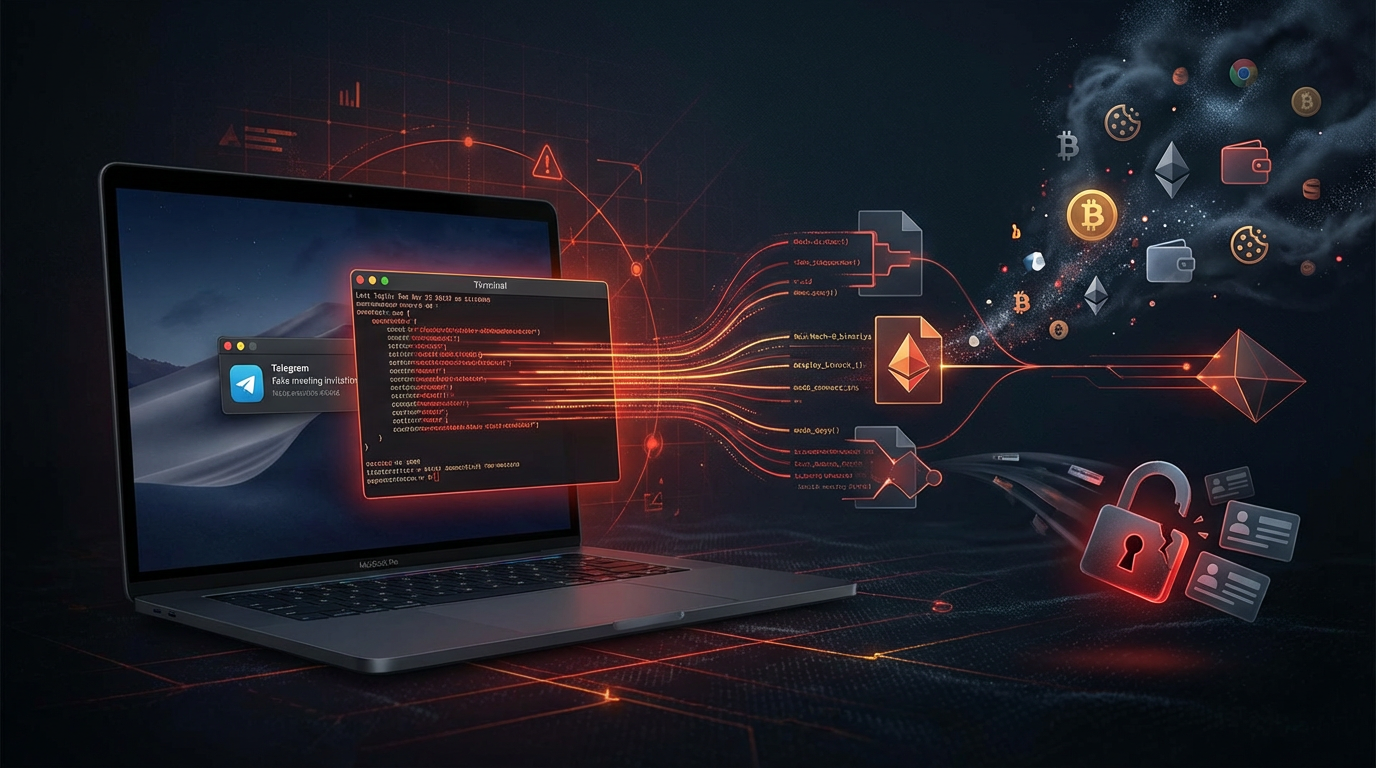
Operatives initiated the infection through urgent meeting invitations distributed via Telegram. Compromised accounts, often posing as legitimate business entities, lured victims to fraudulent websites. These portals replicated the user interface of video conferencing platforms. Users received instructions to copy and execute a specific command string within the Mac Terminal application to “resolve connection issues” during the fake meetings.
This “ClickFix” strategy allowed the syndicate to deliver a malicious payload without relying on software vulnerabilities. Researchers at ANY.RUN confirmed the toolkit consisted of multiple Mach-O binaries. The malware bypassed traditional endpoint detection by forcing users to initiate the command execution manually within an active session.
Toolkit Mechanics and Data Exfiltration
The malware prioritized the theft of sensitive financial assets after the initial compromise. Binaries written in the Rust programming language harvested cryptocurrency wallet private keys, recovery phrases, and seed data. The malicious code also accessed browser cookies for logged-in exchange accounts, saved passwords, and authentication tokens.
SlowMist CISO 23pds issued a formal alert regarding the evolution of these macOS capabilities. “Lazarus Group has released a brand new native macOS malware toolkit called ‘Mach-O Man,’ targeting cryptocurrencies and high-value executives,” the CISO said Wednesday. Jamf Threat Labs reported a sharp uptick in Lazarus-related macOS activity, identifying several families of trojanized applications and backdoors aimed at Apple systems.
Genuine News Deserves Honest Attention.
High-conviction projects require an intelligent audience. Connect with readers who value sharp reporting.
👉 Submit Your PREvolution of State-Sponsored Cyber Operations
The Lazarus Group targeted the digital asset industry since at least 2017 to secure funding for state objectives. Previous operations, such as “Operation AppleJeus” and the “RustBucket” campaign, utilized trojanized trading software and fraudulent job offers to infiltrate financial environments. Federal authorities, including the U.S. Treasury and the FBI, attributed over $2 billion in exchange thefts to the group over the last decade.
Chain Street’s Take
Lazarus identified the Mac as the ultimate soft target in the crypto-financial stack. The “Mach-O Man” campaign proved that social engineering remains the most efficient bypass for even the most hardened operating systems. By moving the attack vector from software exploits to the user’s compliance with “meeting fixes,” the group turned the Terminal application into a state-sponsored ATM.
Fintech firms currently face a procedural crisis. Security budgets often focus on network perimeter defense, yet the human element remains the primary point of failure. If executives maintain the authority to execute unvetted scripts, no amount of technical security can protect the underlying capital.
Activate Intelligence Layer
Institutional-grade structural analysis for this article.