

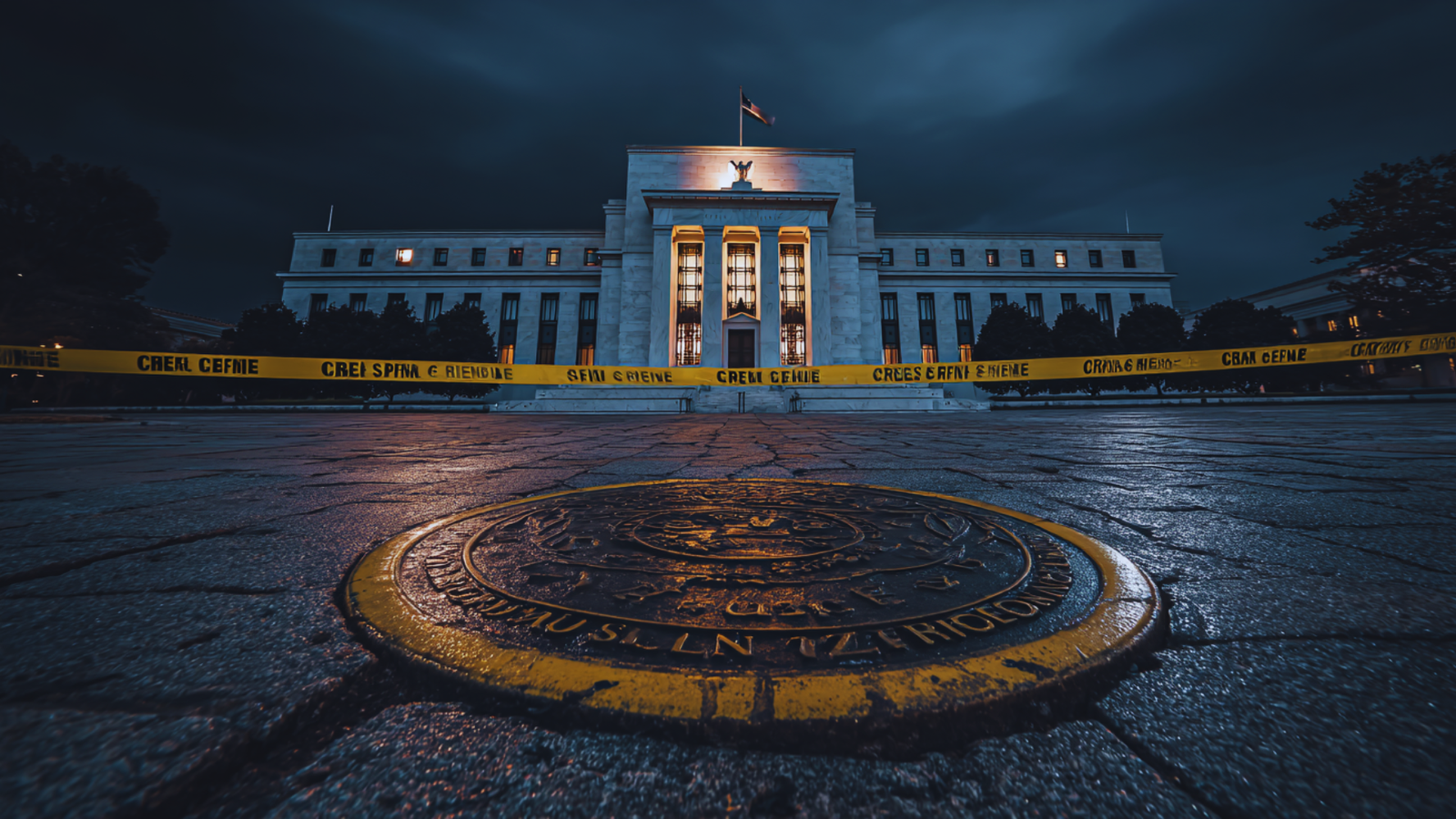

Wall Street lost the traditional firewall between the printing press and the prosecutor’s office on Monday.
- The Accusation: Fed Chair Jerome Powell explicitly linked DOJ criminal threats to his refusal to cut interest rates, characterizing the investigation into perjury and renovation costs as political retribution.
- The Rupture: The conflict marks the effective end of the 1951 Treasury-Fed Accord, signaling a transition to "Fiscal Dominance" where the central bank is coerced into serving executive spending needs.
- The Reaction: Bond markets signaled acute distress, with the MOVE Index surging 18% and 10-Year Treasury premiums rising 40 basis points as investors priced in the loss of monetary independence.
Federal Reserve Chair Jerome Powell explicitly accused the Department of Justice of political retaliation during a press briefing. Powell stated that the threat of criminal charges against him is a direct consequence of his refusal to lower interest rates to match White House demands.
The allegation marks the formal collapse of the 1951 Treasury-Fed Accord. That historic agreement previously protected the central bank from executive branch coercion for 75 years.
The Justice Department issued subpoenas on January 9 regarding alleged perjury and building renovation costs. Powell characterized the investigation as a pretext for enforcing executive control over monetary policy.
“The threat of criminal charges is a consequence of the Fed setting rates based on our best assessment of what will serve the public, rather than following the preferences of the President,” Powell said. “I will continue to do the job the Senate confirmed me to do to serve the American people.”
Genuine News Deserves Honest Attention.
High-conviction projects require an intelligent audience. Connect with readers who value sharp reporting.
👉 Submit Your PRThe Rate Defiance and Prosecution Timeline
The legal offensive intensified exactly 21 days after the Federal Open Market Committee (FOMC) voted to hold interest rates steady on December 18, 2025. The decision defied public calls from President Trump for an immediate 50-basis-point cut.
Representative Anna Paulina Luna (R-FL) confirmed the Justice Department action stems from a formal referral she made in mid-2025. Luna alleged that Powell lied under oath to Congress and misrepresented facts in communications to senior administration officials.
“Unelected bureaucrats do not get a free pass,” Representative Luna said. She expressed support for the Justice Department pursuing the perjury claims and noted that no one is above the law.
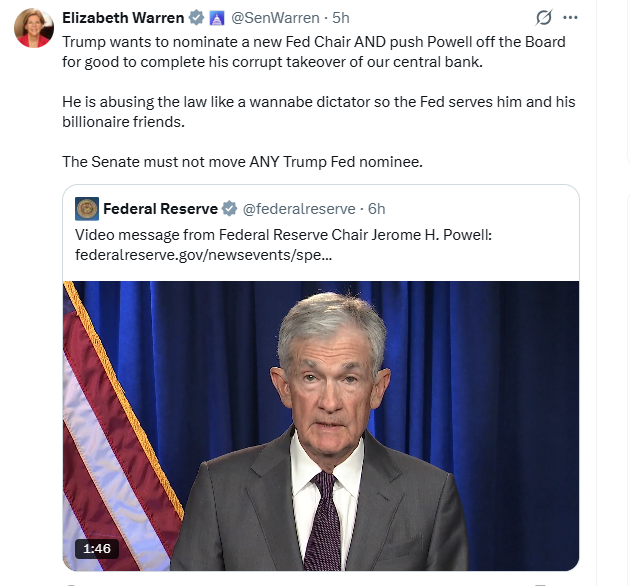
Senate Democrats view the investigation as a hostile takeover. Senator Elizabeth Warren (D-MA) argued the administration is abusing the law to force the central bank to serve political allies. She urged the Senate to block any potential replacement if the administration removes Powell before his term ends in May 2026.
Market Volatility and Fiscal Dominance
Open conflict between the Fed and the White House introduced a permanent political risk premium into U.S. assets. The MOVE Index, which tracks bond market volatility, surged 18% following the issuance of the subpoenas.
The spike indicates acute distress in the Treasury market as investors fear the loss of technocratic neutrality. U.S. 10-Year Treasury term premiums shifted 40 basis points higher on Monday.
Investors appear to be pricing in a regime of fiscal dominance where monetary policy becomes subservient to government spending needs. Institutional confidence is eroding alongside market stability. Public trust in the Federal Reserve has plummeted to a 20-year low of 36% according to recent Gallup data.
Global central banks responded to the turmoil by accelerating gold purchases. These acquisitions now represent 25% of total annual demand. Foreign nations treat gold as a hedge against the perceived politicization of the U.S. dollar.
The Pretext Strategy and Monetary Realignment
Market analysts argue the specific charges regarding building costs are secondary to the executive branch’s strategic goals. The timing suggests the renovation probe serves as a legal enforcement mechanism for presidential policy.
“The renovation probe is the legal pretext,” market analyst Shanaka Anslem Perera stated. “The rate demands are the objective.”
A sitting Federal Reserve Chairman accusing the Justice Department of weaponizing prosecution marks the most consequential shift in American monetary governance since 1913. The mechanism of pressure transitioned from public rhetoric to prosecutorial power this week.
Eroding the firewall between the printing press and the prosecutor’s office revalues the dollar as a geopolitical tool rather than a neutral reserve asset.
Chain Street’s Take
The 1951 Accord is dead. By weaponizing the Justice Department against a sitting Fed Chair, the administration crossed the Rubicon from pressure to coercion.
Whether Powell committed perjury regarding renovation costs is legally relevant but macro-economically secondary. The market sees a hostile takeover of the federal funds rate.
If the Fed Chair faces indictment for defying the White House, the dollar ceases to be a neutral reserve asset. It becomes a political instrument.
The political risk premium on the dollar just became a permanent feature of the global economy. Jerome Powell is fighting for his legacy. The market is fighting for its anchor.
Activate Intelligence Layer
Institutional-grade structural analysis for this article.