
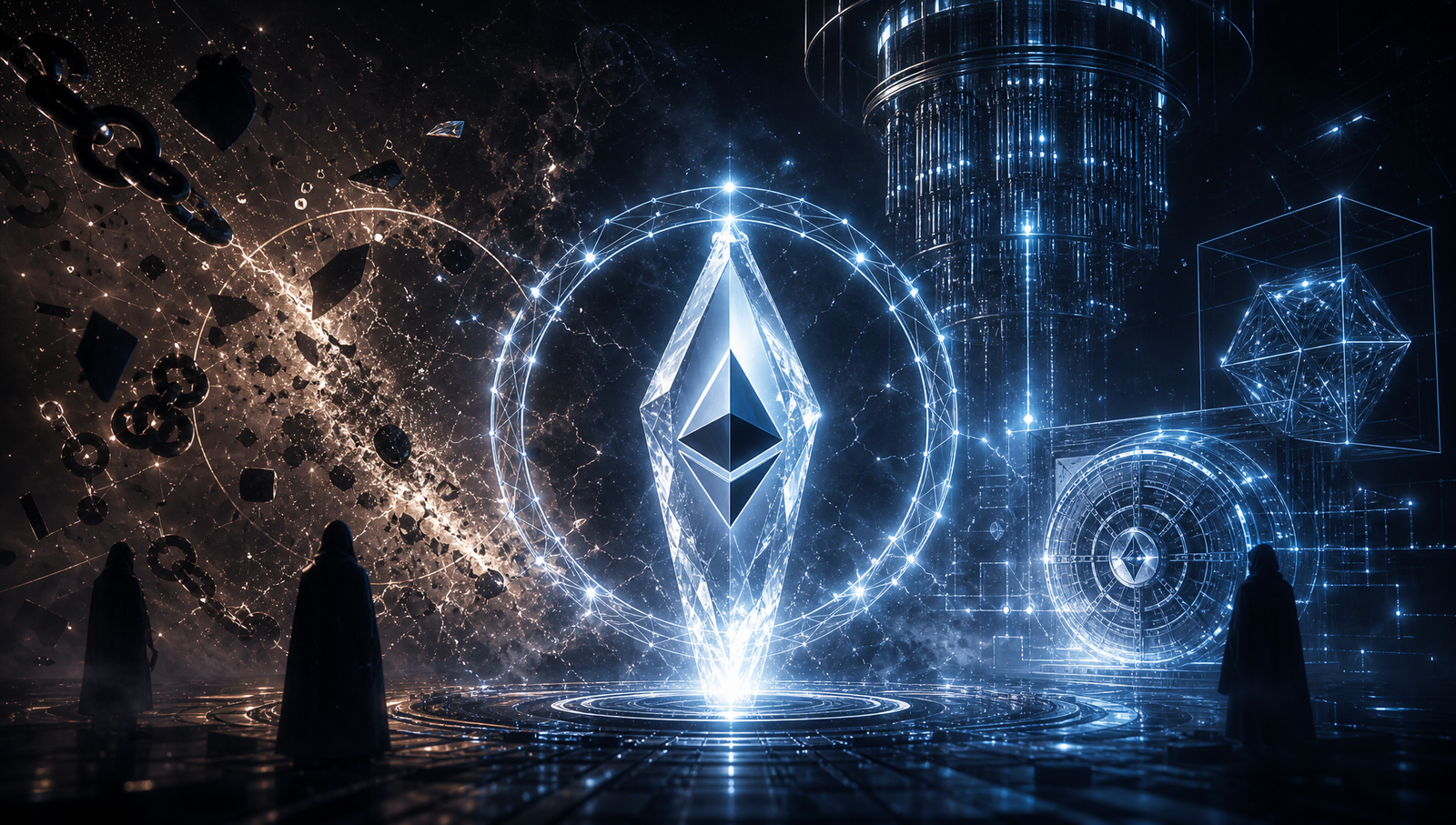

Ethereum Foundation researcher Justin Drake publishes a detailed technical update, examining rapid progress in quantum cryptanalysis and presenting the network’s proactive defense roadmap.
- Ethereum Foundation researcher Justin Drake updates the network's post-quantum roadmap to 2029, citing accelerated breakthroughs in Shor’s algorithm optimization.
- The community utilizes LeanVM and hash-based cryptography to replace vulnerable elliptic curve signature schemes (secp256k1) before quantum processors become viable.
- Global research collectives successfully neutralize attempts at academic censorship, proving that collaborative transparency outpaces centralized secret-keeping in cryptographic security.
The developer posted the technical analysis Tuesday, evaluating Google Quantum AI’s March 31 research paper. Google’s work demonstrated significant improvements to Shor’s algorithm, reducing the logical qubit requirements needed to attack elliptic curve signatures like the secp256k1 scheme utilized by Bitcoin and Ethereum.
The research team presented the core optimization but concealed the underlying mathematical details behind a zero-knowledge proof to limit the immediate proliferation of the decryption vector. Drake, who served as a co-author on the paper, noted the unusual decision, “Instead of following standard academic process, the optimizations were kept secret, hidden behind a zero-knowledge (ZK) proof… academic censorship with ZK, a historic first.”
The attempt at controlled disclosure quickly collapsed due to parallel independent research. French quantum researcher André Schrottenloher independently rediscovered the primary optimization and published his findings on arXiv the same day. Concurrently, Shor’s algorithm expert Craig Gidney revealed that he had withheld the same breakthrough for a year due to institutional pressure. A decentralized collective at the repository ecdsa.fail subsequently optimized Google’s circuit by 8.4 percent in logical qubit requirements.
Progress on physical hardware further compressed the post-quantum timeline. A stealth startup named Oratomic published a paper claiming that neutral-atom quantum architectures could break production-grade elliptic curve cryptography with only 10,000 physical qubits. After reviewing the startup’s hardware claims, Drake found the calculations credible and adjusted his personal timeline, estimating a 50 percent probability of a systemic cryptographic breach by 2032.
Genuine News Deserves Honest Attention.
High-conviction projects require an intelligent audience. Connect with readers who value sharp reporting.
👉 Submit Your PRTo protect user assets, the Ethereum Foundation accelerated its transition to quantum-resistant primitives through the Lean Ethereum initiative. The proactive strategy abandoned vulnerable signature schemes in favor of hash-based alternatives across both the consensus and execution layers. A central component of the migration plan relied on LeanVM, a minimal, SNARK-friendly virtual machine optimized for real-time zero-knowledge proving. Drake described the virtual machine’s architecture as “a jewel.”
The Ethereum Foundation backed the cryptographic overhaul with two distinct $1 million incentive programs. The first allocation, named the Proximity Prize, funded research into coding theory to optimize hash-based SNARKs, while the Poseidon Initiative offered rewards for any verified break of the SNARK-friendly Poseidon hash function. These programs aimed to ensure a smooth, zero-downtime migration by 2029, aligning Ethereum with the post-quantum timelines established by commercial infrastructure providers.
Chain Street’s Take
Drake’s update showed quantum progress moving faster than many expected, but it also revealed Ethereum’s preparedness. By leaning on hash-based cryptography and LeanVM rather than reactive patches, the network treated the quantum threat as an opportunity to build stronger foundations. The open-source community’s swift rediscovery of Google’s optimizations reinforced that transparency and collaboration remained powerful tools even against sophisticated concealment attempts.
Activate Intelligence Layer
Institutional-grade structural analysis for this article.