



Automated AI agents and web crawlers eclipse human activity online, validating predictions of an agentic web and raising urgent demands for machine-native database protocols.
- Cloudflare Radar verifies that automated software agents command 57.5 percent of global web traffic, marking the first time in history that bots have eclipsed human browsing.
- The crossover arrives eighteen months ahead of industry projections, driven by an exponential surge in AI-agentic workflows and decentralized scraping.
- Traditional human-centric monetization and advertising models face structural deflation as autonomous machines now dominate the primary load on the global internet.
The balance of power on the global internet shifted permanently on Wednesday, when network telemetry verified that automated software surpassed human activity for the first time. According to real-time HTML requests logged on Cloudflare Radar’s traffic dashboard, bot-generated traffic accounted for 57.5 percent of web page requests, while human users represented only 42.5 percent. The historical crossover arrived nearly eighteen months ahead of industry projections, illustrating the rapid proliferation of autonomous software agents browsing the web.
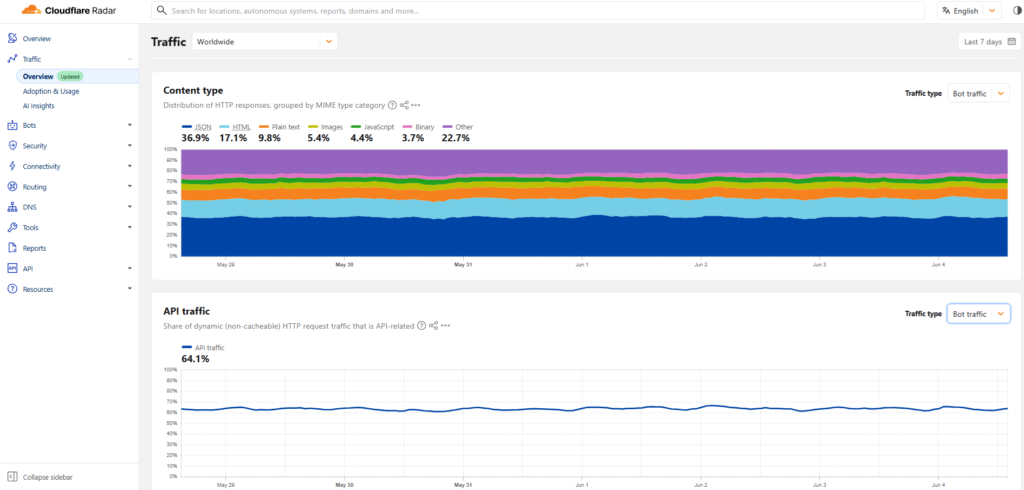
Cloudflare Chief Executive Officer Matthew Prince expressed surprise at the speed of the transition. In a public disclosure on X, the executive admitted that his previous forecasts underestimated the scaling velocity of automated web browsing:
“Welp, that happened faster than I predicted. Thought it would be end of 2027, then early 2027, but agentic traffic growing so fast that bots have now passed human traffic online for the first time in the Internet’s history.”
The shift in internet demographics prompted immediate calls for a fundamental redesign of decentralized database infrastructure. Decentralized storage network Filecoin highlighted the operational necessity of developing specialized protocols designed strictly for machine-to-machine interaction, “Bots are already good enough to pass as human traffic. The internet needs machine-native infrastructure now: storage agents can read, write, and verify without a human in the loop.”
Genuine News Deserves Honest Attention.
High-conviction projects require an intelligent audience. Connect with readers who value sharp reporting.
👉 Submit Your PRTechnology analysts noted that the transition fundamentally altered the purpose of online content creation. Software engineer Kislay Parashar observed that the milestone reflected a wider cultural displacement of human users: “Bots passing humans feels less like a milestone and more like we just aren’t the main users of the internet anymore. Most of what’s online probably isn’t even for us now.”
Third-party security audits quickly corroborated Cloudflare’s findings. Cyber security firm HUMAN Security reported in its 2026 State of AI Traffic assessment that automated web traffic grew eight times faster than human browsing throughout the previous year. Additionally, the 2026 Bad Bot Report compiled by cybersecurity firm Thales indicated that automated systems accounted for over 53 percent of all global web traffic, showing that traditional browser-based monetization models faced immediate economic pressure.
The rise of agent-driven web browsing challenged the foundational business models of the consumer internet. Advertising systems engineered around human attention metrics, such as page views and conversion funnels, experienced sudden structural deflation because automated agents generated zero programmatic ad impressions. Software developers began exploring automated verification protocols to manage the load, signaling a major transition away from human-centric design toward automated trust networks.
Chain Street’s Take
The silent crossover of bot traffic on Cloudflare Radar demonstrated that the human-centric internet has entered its legacy phase. By letting automated agents generate the majority of web requests, the digital economy officially outgrew the legacy infrastructure of CAPTCHAs and cookie banners. For decentralized technologies like Filecoin, this machine-native reality represents the ultimate use case, proving that the future of data management belongs to trustless, permissionless protocols built to let independent AI agents read and write information without requiring human intervention.
Activate Intelligence Layer
Institutional-grade structural analysis for this article.