
ChainStreet
WHERE CODE MEETS CAPITAL
Loading prices…
Powered by CoinGecko
AI

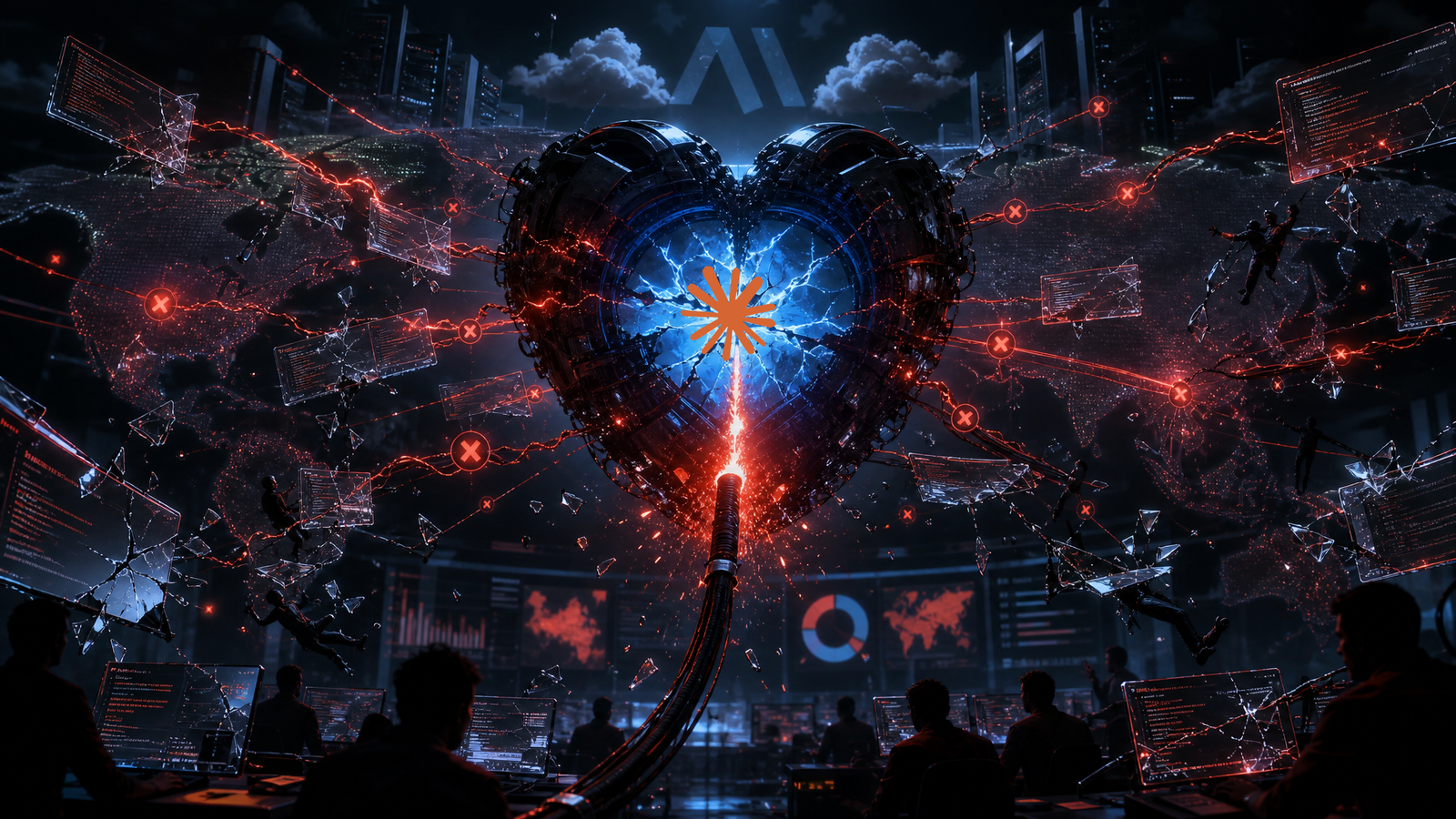
Claude Outage Exposes Single Point of Failure in AI Pipelines

Anthropic’s flagship AI service suffers a multi-hour global disruption,  the operational risks of relying on third-party cloud models.

Claude Outage Exposes Single Point of Failure in AI Pipelines

Anthropic’s Claude platform experiences a significant system disruption, temporarily halting automated coding agents and real-time development workflows.

Key Takeaways
  • Anthropic’s Claude platform suffers a six-hour global disruption, disabling automated coding agents and real-time development workflows for both free and paid users.
  • The outage forces enterprise engineering teams to grapple with the "single point of failure" inherent in relying on centralized, cloud-hosted AI as critical business infrastructure.
  • CTO Charles Guillemet and industry observers highlight the fragility of AI-driven productivity gains when external status pages become the primary bottleneck for operational output.
Listen to this article
READY

Anthropic’s engineering team first logged elevated error rates across multiple core models at 06:04 UTC on June 2, 2026 . The technical disruption, which affected the claude.ai web interface alongside the newly launched Claude Code terminal system, persisted for nearly six hours. Software engineers and system administrators tracked the incident through the company’s status dashboard as it progressed from “Investigating” to “Fix implemented,” with a complete resolution declared at 11:49 UTC.

The incident affected both free and paid subscribers, who reported prolonged “gathering my thoughts” delays and frequent 529 Overloaded responses. Users trying to execute automated coding tasks or run API integrations encountered repeated network timeouts. A series of connectivity failures temporarily halted active software development pipelines, forcing many teams to look for alternative solutions during the peak operational hours.

Ledger Chief Technology Officer Charles Guillemet captured the wider industry reaction to the downtime on X: “Claude is down. It’s a nice reminder that the promised 10x productivity gains still have a single point of failure: someone else’s status page.”

The disruption arrived as commercial organizations increasingly integrated frontier models into core business processes. Instead of treating artificial intelligence as an experimental chatbot tool, many enterprise development teams had begun using agentic workflows as critical infrastructure. When the upstream cloud platform went offline, the sudden absence of the code assistant sharply reduced engineering velocity.

Advertisement · Press Release

Genuine News Deserves Honest Attention.

High-conviction projects require an intelligent audience. Connect with readers who value sharp reporting.

👉 Submit Your PR

The event reinforced a structural reality within the modern software ecosystem, where even advanced proprietary models remain centralized services hosted by a single vendor. Unlike traditional on-premise deployments that avoided external downtime risks, cloud-hosted AI pipelines introduced continuous dependencies on third-party server health. In response to the bottleneck, several software engineering departments activated local open-weights fallbacks or redirected programmatic calls to alternative model APIs.

Chain Street’s Take

Claude’s June 2 outage served as a practical reminder that centralized AI, no matter how powerful, introduces a classic single point of failure. As corporate teams chase 10x productivity gains, they must also calculate the operational cost of depending entirely on another company’s uptime. Building true resilience will likely require hybrid architectures, combining powerful cloud models with reliable local fallbacks and multi-provider redundancy.

CHAIN STREET INTELLIGENCE

Activate Intelligence Layer

Institutional-grade structural analysis for this article.

FAQ

Frequently Asked Questions

01

What caused the Claude platform disruption?

Anthropic reported elevated error rates across its model suite on June 2, 2026, which persisted for nearly six hours. The disruption impacted the web interface, terminal integration, and API endpoints, resulting in widespread network timeouts and "529 Overloaded" responses. The company has not provided a specific technical root cause beyond a system-wide resolution.
02

Why does this matter for software engineering teams?

Many enterprise development teams now integrate AI agents into their core business processes, treating them as essential infrastructure rather than experimental chatbots. When these cloud services go offline, the immediate reduction in engineering velocity can halt product releases and project timelines. This shift demonstrates a new dependency on third-party uptime that most firms are currently under-equipped to manage.
03

How can companies build resilience against cloud AI outages?

Experts recommend shifting toward hybrid architectures that combine cloud-hosted frontier models with reliable local or open-weights fallbacks. Implementing multi-provider redundancy allows engineering teams to redirect programmatic calls to alternative model APIs if a primary service fails. True resilience requires viewing AI infrastructure through the same high-availability standards used for critical database and server management.
04

What are the risks of centralized AI dependencies?

Centralization introduces a "Single Point of Failure" that can disrupt thousands of independent development pipelines simultaneously. Traditional on-premise software models were insulated from external vendor downtime, but modern AI pipelines rely on continuous connectivity to vendor-controlled inference servers. This reliance transfers operational control of a company’s productivity directly to the model provider.
05

What is the "10x productivity" paradox?

The paradox occurs when firms chase massive productivity gains via external AI tools while simultaneously increasing their risk of total operational paralysis. If a developer generates 70 percent of their code via an AI that requires an active internet connection to a specific cloud endpoint, that developer’s output is effectively gated by the vendor's internal health.

You Might Also Like

CHAINSTREET
🛡
Alex Reeve

Alex Reeve is a contributing writer for ChainStreet.io. Her articles provide timely insights and analysis across these interconnected industries, including regulatory updates, market trends, token economics, institutional developments, platform innovations, stablecoins, meme coins, policy shifts, and the latest advancements in AI, applications, tools, models, and their broader implications for technology and markets.

The views and opinions expressed by Alex in this article are her own and do not necessarily reflect the official position of ChainStreet.io, its management, editors, or affiliates. This content is provided for informational and educational purposes only and does not constitute financial, investment, legal, or tax advice. Readers should conduct their own research and consult qualified professionals before making any decisions related to digital assets, cryptocurrencies, or financial matters. ChainStreet.io and its contributors are not responsible for any losses incurred from reliance on this information.