



Shiba Inu occupies a selective position in Japan as one of the few tokens with meme origins to possess pre-approved status. The designation allows licensed exchanges to list the asset via a simple notification process rather than lengthy case-by-case reviews.
- Shiba Inu gains pre-approved status on the Japan Virtual and Crypto Assets Exchange Association Green List for licensed domestic trading.
- The project exceeds the three-platform regulatory bar with eight licensed exchange integrations including bitFlyer, BitPoint, and OKCoin Japan.
- Pre-approval allows Japanese exchanges to bypass lengthy case-by-case reviews, creating a regulatory moat against thousands of unvetted meme assets.
Registry Milestones and Entry Criteria
The Japan Virtual and Crypto Assets Exchange Association added the token to the official Green List in November 2025. Formal entry followed an effort spanning several years to establish a verifiable domestic footprint.
The asset reached the necessary three-exchange threshold on March 22, 2023, when bitFlyer began trading the token. BitPoint and OKCoin Japan initiated support earlier in the cycle. Reaching the three-platform bar satisfied the baseline requirements for formal vetting by the JVCEA.
Official pre-approval changed the environment for local exchanges. The registry functioned as a formal whitelist of vetted assets.
Licensed platforms gained the ability to list the token immediately under a set of codified rules. Legitimate status placed the project in the same category as Bitcoin and Ethereum.
Genuine News Deserves Honest Attention.
High-conviction projects require an intelligent audience. Connect with readers who value sharp reporting.
👉 Submit Your PRAdministrators bypassed the slow reviews that historically delayed the introduction of new assets in the Japanese market. Every asset traded on a licensed exchange in the country required vetting by the JVCEA, which is the self-regulatory body overseen by the Financial Services Agency.
Operational Visibility and Standards
The JVCEA assessment focused on open project disclosures and orderly trading conduct. The project established its qualification following a streak of exchange presence.
The development of the Shibarium layer-2 network assisted the process. Many high-volume tokens with meme origins fell short of the institutional thresholds during the same period. A multi-year track record inside a strict regime gave the project a documented compliance history.
Neighboring regulators viewed the Japanese vetting process as a rigorous benchmark. The history functioned as a reference point when developers engaged officials in other jurisdictions.
The Tokyo credential provided a documented record of pricing reliability that most pure speculative tokens lacked. Vetting requirements mandated a minimum of three exchange listings for qualification. Project openness focused on technical soundness. Market conduct assessments checked for manipulation risks.
Structural Advantages and Liquidity
The Green List ended the era of slow approvals for tokens that earned the designation. Pre-approved assets skipped the queue. Any JVCEA-licensed exchange listed them immediately.
Before 2022, the oversight system demanded exchange-by-exchange reviews for every individual token. Slow processes and high costs created a genuine barrier for domestic traders who watched offshore markets move while waiting for local approvals.
Shiba Inu cleared the hurdles in 2025 with seven licensed exchange integrations. The project exceeded the minimum threshold by nearly triple the required amount.
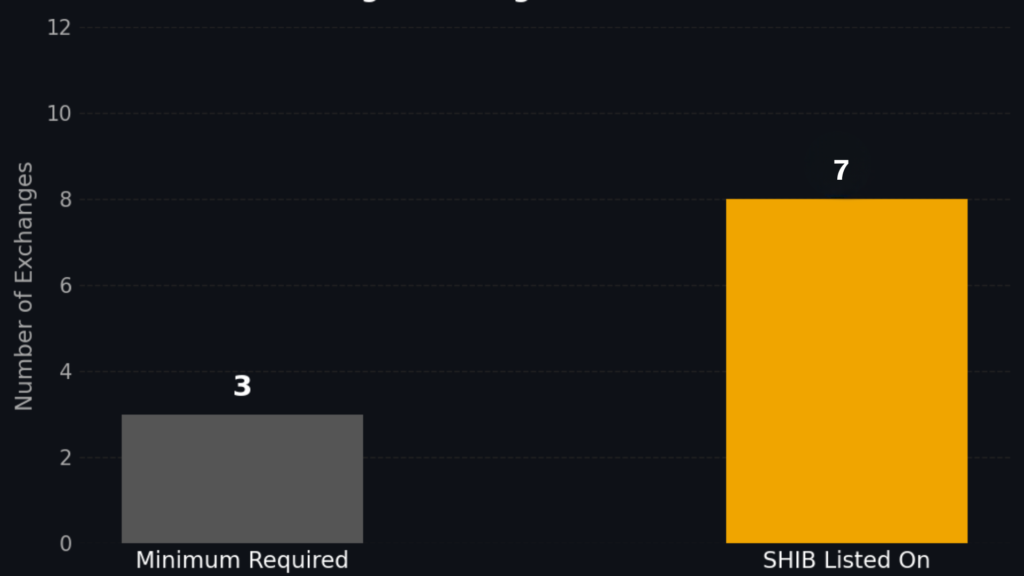
Deep market integration inside a compliance-heavy jurisdiction provided the necessary data for the whitelist. The Shibarium layer-2 network and years of steady exchange listings built the official record the JVCEA required for the designation. The move placed Shiba Inu in a group of fewer than 35 tokens globally that held the pre-approved Japanese status.
ChainStreet’s Take
The whitelist in Tokyo works as a survivorship filter rather than a popularity contest. The ability of Shiba Inu to maintain standards inside a compliance-heavy jurisdiction, in a global market flooded with thousands of unvetted assets creates a clear differentiator.
The advantage appears in the form of easier access to regulated retail capital, but the project must work to keep it. For an asset that started as a meme, clearing this bar represents quiet, substantive progress.
Lasting separation from the broader speculative sector will depend on sustained execution. We are following trading volumes in Tokyo to see how the regulatory edge plays out in practice.
Activate Intelligence Layer
Institutional-grade structural analysis for this article.