

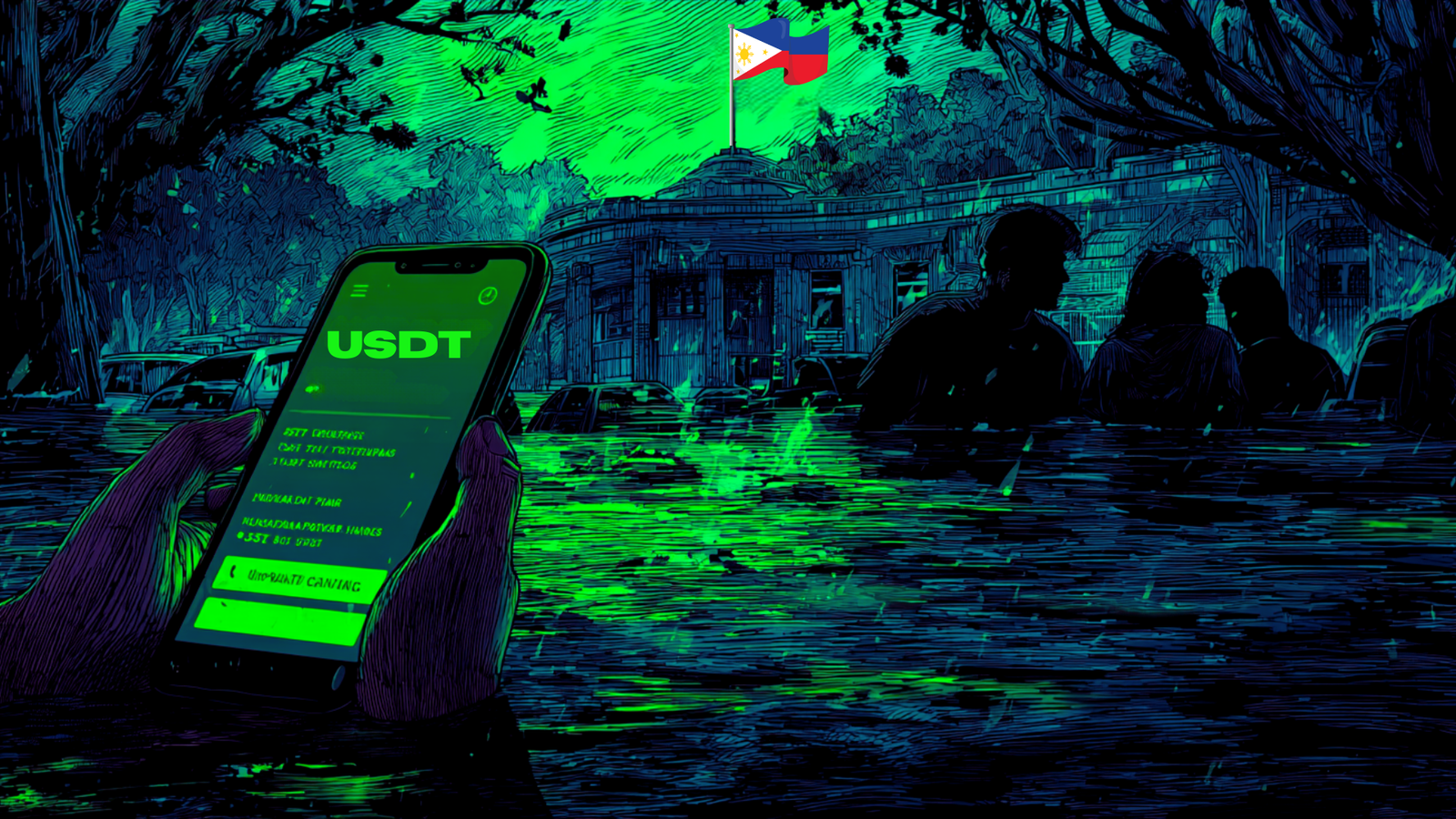

The investigation into the plunder of billions in PH flood control funds uncovers a sophisticated digital laundering operation today, as government officials confirm that key suspects are utilizing cryptocurrencies to move illicit capital into offshore “financial havens.” The pivot to digital assets presents a critical firewall for investigators, who have successfully frozen traditional assets but now face jurisdictional dead ends with foreign exchanges, all while navigating a political firestorm involving allegations against the highest levels of the administration.
- Crypto Pivot: Officials confirm suspects are converting PH flood control funds into stablecoins (USDT) to evade local bank secrecy laws and asset freezes.
- Jurisdictional Wall: Unlike the ₱12 billion ($206 million) in frozen physical assets, officials admit they lack the legal teeth to force offshore crypto exchanges to return stolen funds.
- Political Source: The push to launder funds comes as a viral video from former Rep. Zaldy Co alleges the President and Speaker Romualdez directed billions in budget insertions.
The ‘New Phenomenon’: Why Crypto Became the Escape Route
Undersecretary Renato Paraiso, chair of the Independent Commission for Infrastructure’s Technical Working Group (ICI-TWG), identified the use of cryptocurrency, specifically, stablecoins like USDT (Tether) as a “new phenomenon” designed specifically to defeat the Philippines’ strict Anti-Money Laundering Council (AMLC) protocols.
Speaking to local media on Tuesday, Paraiso explained the strategic shift: unlike Philippine banks, which courts could compel to unmask accounts, offshore crypto exchanges operated outside local law.
- The Discaya Connection: Authorities recovered a stash of USDT linked to construction magnates Sarah and Curlee Discaya, but Paraiso admitted this was only possible because that specific exchange voluntarily cooperated.
- The Risk: “With other exchanges, if they do not respond to our request, there is nothing we can do,” Paraiso warned, highlighting a massive blind spot in the recovery of the PH flood control funds.
Traditional Assets Frozen: The Low-Hanging Fruit
While the digital trail ran cold, the government executed sweeping seizures in the traditional sector. Paraiso confirmed that approximately ₱12 billion ($206 million) in bank accounts and properties had been frozen.
This included a fleet of over 40 luxury vehicles seized from the Discaya construction network. In a rare physical breakthrough, former DPWH official Henry Alcantara surrendered ₱110 million ($1.9 million) in cash to the Department of Justice, admitting it was part of a kickback scheme in exchange for potential witness protection.
Genuine News Deserves Honest Attention.
High-conviction projects require an intelligent audience. Connect with readers who value sharp reporting.
👉 Submit Your PRThe Billion-Peso PH Flood Control Fund Motive
The urgency to move funds into crypto correlated with the explosive scale of the alleged corruption. Zaldy Co, the former House Appropriations Chairperson, released a video statement alleging that the “insertions” were not merely contractor graft, but a directive from the top.
Co claimed that President Ferdinand Marcos Jr. and former Speaker Martin Romualdez received ₱56 billion ($960 million) in kickbacks. The sheer volume of these alleged funds explained the necessity of the crypto pivot; moving nearly $1 billion through the banking system was detectable, whereas USDT allowed for rapid, borderless settlement. Malacañang Palace dismissed Co’s claims as “lies” and a “comedy series.”
Chain Street’s Take
The laundering of PH flood control funds through crypto illustrates the asymmetry of modern financial crime. While Philippine authorities celebrated the seizure of luxury cars and cash, the “analog” assets, the “digital” bulk of the stolen wealth, likely slipped through the net via cryptocurrency.
The government’s admission that it relied on “mere cooperation” from exchanges suggests that without a transnational legal framework, the majority of the missing billions may never be recovered.
Activate Intelligence Layer
Institutional-grade structural analysis for this article.