

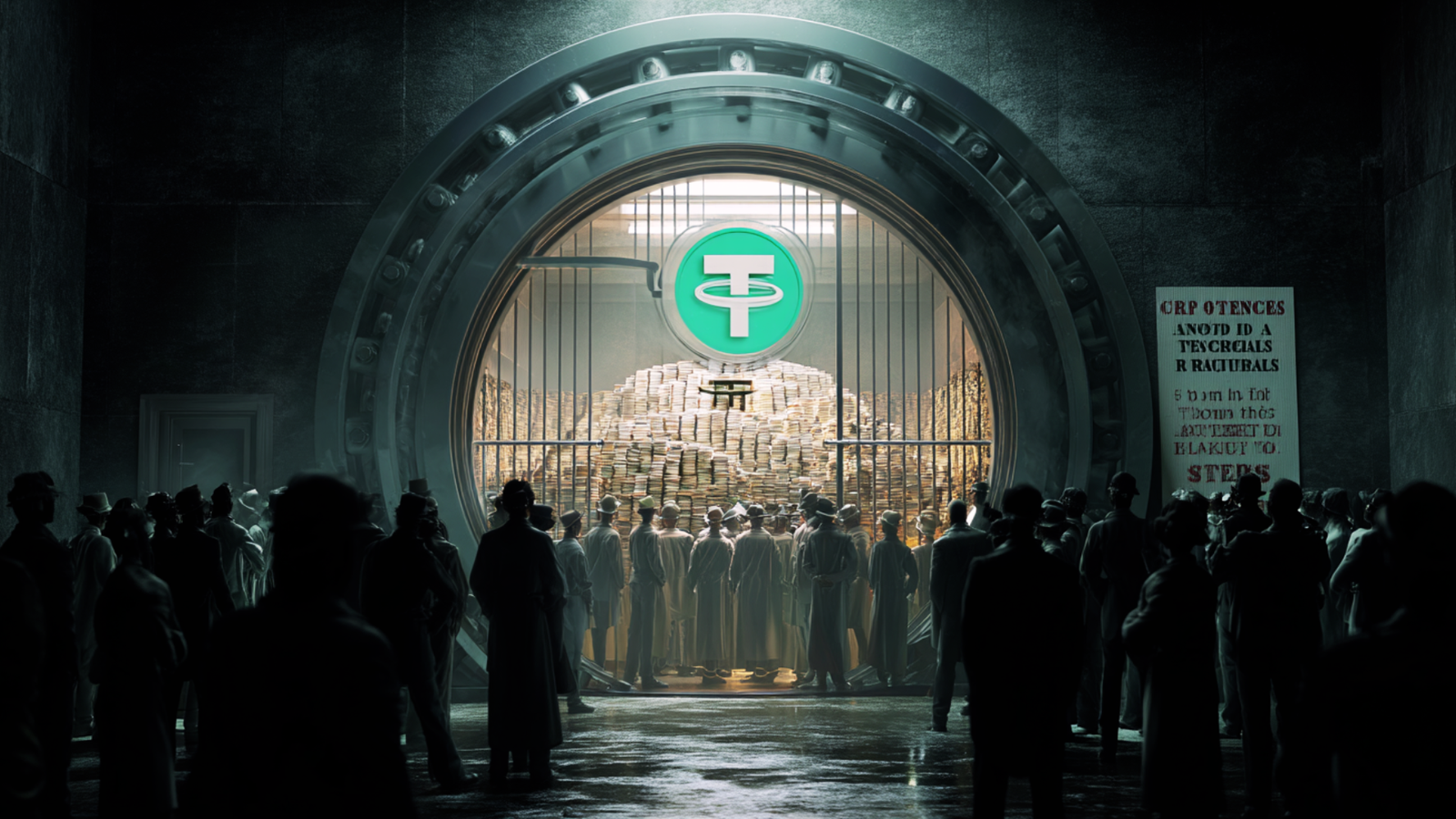

Congress authorized a $6 billion annual wealth transfer. The GENIUS Act contains a specific mandate that forces the confiscation of yield from stablecoin holders.
- The Heist: Congress legalized a $6 billion annual wealth transfer via Section 11 of the GENIUS Act, which explicitly prohibits stablecoin issuers (like Tether) from sharing Treasury yields with retail users.
- The Apartheid: Analyst Shanaka Anslem Perera labels this "Yield Apartheid," where retail holders get 0% returns while institutions access ~5% yields through restricted products like BlackRock’s BUIDL.
- The Risk: The policy hands a geopolitical advantage to China, whose Digital Yuan now offers a 0.35% return, making the US Digital Dollar an inferior product for merchants in the Global South.
The legislation hands a significant competitive advantage to foreign digital currencies. Independent analyst Shanaka Anslem Perera released a report characterizing the move as a heist against the global user base of the U.S. dollar.
The controversy centers on Section 11 of the Guiding and Establishing National Innovation for U.S. Stablecoins Act. The provision explicitly prohibits payment stablecoin issuers from distributing interest to users. Perera calculates that Tether generates over $6 billion in annual risk-free revenue. The firm holds approximately $135 billion in U.S. Treasuries yielding roughly 4.5%. Under the new law, issuers face a legal ban on passing these returns to the user.
GENIUS ACT and the Rise of Yield Apartheid
The report identifies a bifurcated financial system, termed Yield Apartheid. Retail users in the Global South effectively subsidize the profits of centralized issuers. Simultaneously, sophisticated institutional capital accesses identical yields through different legal wrappers.
Stablecoin holders remain locked out of returns. Institutional players, however, utilize products like BlackRock’s BUIDL and Franklin Templeton’s BENJI. These funds offer yields nearing 4.9% backed by the same Treasury collateral used by stablecoin issuers. Capital moved out of zero-yield stablecoins and into yield-bearing tokenized Treasuries throughout late 2025. Perera noted that the GENIUS Act unintentionally created the very product that threatens its own success.
Genuine News Deserves Honest Attention.
High-conviction projects require an intelligent audience. Connect with readers who value sharp reporting.
👉 Submit Your PRGeopolitical Risks and the Digital Yuan
The yield ban undermines the global dominance of the U.S. dollar as competitors begin to offer incentives. China activated yield functionality for its digital yuan on January 1, 2026. The People’s Bank of China now offers a 0.35% return to holders.
The lack of yield forces a difficult choice for merchants in critical swing markets like Brazil, Nigeria, and Indonesia. Holding digital dollars guarantees a loss against inflation. Holding digital yuan provides a modest return. Perera stated that America chose extraction while China chose distribution. Merchants choosing settlement rails now face a market where America charges them to hold currency and China pays them to hold yuan.
Impact on Global Dollar Liquidity
Economists argue that stripping the monetary premium from the digital dollar will eventually reduce global demand. Stablecoins serve as the primary on-ramp for the dollar in emerging economies. If the user experience provides all the risk of a centralized issuer with none of the rewards of the underlying collateral, capital will seek alternatives.
The GENIUS Act aimed to provide clarity for the industry. Instead, the final text protects legacy bank deposits by making digital dollars less attractive to the general public. This structural disadvantage creates an incentive for the world to look beyond the dollar for digital settlement. The market continues to evaluate if the “safety” of a U.S. charter outweighs the loss of $6 billion in annual purchasing power.
Chain Street’s Take
Congress listened to the bank lobby and ignored the reality of the market. By banning stablecoin yield, the GENIUS Act turned the digital dollar into an inferior product. The math is brutal. Retail investors get 0%.
Tether gets $6 billion. BlackRock clients get 5%. The policy provides a structural incentive for the world to stop using the dollar. If the user experience of the USD offers all the risk and no reward, the market will eventually find a currency that pays. Washington just handed China a massive opening in the digital currency war.
Activate Intelligence Layer
Institutional-grade structural analysis for this article.